Showing posts with label crossover. Show all posts

Friday, March 15, 2013

BMW X6 2013

Clique para ver em alta resoluçãoObservar os lançamentos do mercado automotivo nos últimos tempos tem estimulado muita gente a proferir uma frase digna de provocar as maiores doses de agonia nos profissionais do design: “os carros estão todos iguais”. Infelizmente existem mesmo alguns exemplos que validam esta afirmação quando vistos em certos ângulos, mas os que realmente merecem atenção estão no extremo oposto. Um destes ícones mais recentes do estilo automotivo é este crossover cuja nova fase acaba de desembarcar no Brasil.

Comercializado no Brasil pela Eurobike, o mérito do X6 não vem apenas de atrair muitos olhares porque isso se obtém mesmo com carros de aparição mais comum. Sua diferença está em ser um daqueles automóveis que prendem o olhar mesmo das pessoas que não têm tanto interesse nestes produtos. É muito fácil se deter por alguns minutos observando em primeiro lugar os padrões diferentes de formas e volumes, culminando na clássica dúvida entre ele ser um utilitário ou um cupê. Essa curiosidade vem do contraste que a BMW exerceu com muito êxito, ao partir de traços imponentes e volumosos que poderiam gerar qualquer crossover atual (como o próprio irmão X5, por exemplo), mas aliá-los a uma queda de teto digna de um fastback. A outra parte deste encanto dos observadores se expressa em que passar tempo olhando o carro de um lado a outro só melhora a impressão que se teve de início. Não existe um só detalhe que pareça ter sido esquecido, ou recebido menor atenção. São vários vincos e relevos conectando uma forma à outra, criando um conjunto tão fortemente relacionado que entra no clube de exemplos como as fases atuais de Fiat Bravo e Ford Focus: com eles é melhor esperar a época de trocar o modelo por inteiro, porque executar redesenhos parciais sempre tiraria o equilíbrio do design original.

BMW X6Talvez seja esta a razão de o exterior do X6 2013 não ter trazido mudanças maiores que parachoques re-estilizados e novos farois, que não têm problemas em conseguir a intenção de atualizar o modelo para a segunda etapa do seu ciclo de vida – este crossover foi lançado mundialmente em 2009. Quem teve mudanças maiores foi o interior, cuja maior evolução foi eliminar o túnel da transmissão, o que traz o sempre desejado assoalho plano na região do banco traseiro, criando espaço muito melhor para o quinto ocupante. É este banco que também teve o seu reprodutor de DVD trocado, com a tela ganhando posição central. Isso termina de compor uma cabine recheada do nível de luxo e tecnologia típico dos carros desta categoria, cujo console central traz o mesmo padrão de estilo dos demais BMW e também as várias opções de cor, para combinar com os também diversos tons de couro dos bancos em várias possibilidades. As unidades do novo X6 que vêm ao Brasil estarão disponíveis em duas versões: começando em R$ 344.950, a xDrive35i usa o 3.0 biturbo de seis cilindros, que gera 306 cv. Quem quer ainda mais força pode levar a xDrive50i, responsável pelo 4.4 V8 que passa dos 400 cv e eleva o preço a R$ 414.950.

Read more > BMW X6 2013

Hyundai ix35 Fuel Cell

Click to see in high resolutionAfter debuting at the last Paris Motor Show, Hyundai’s latest ecologic initiative had its production started at the South Korean plant. These pictures may show only a slightly redesigned version of this famous crossover, but the truth is this release earns huge importance simply by remembering of its historical context. This ix35 won’t even be offered to the public right now, but this article will show why it can be seen as part of the car industry’s next big step towards the non-pollutant vehicles.

You’ve certainly seen lots of “green” cars being showed in the past few years. Existing vehicles receiving versions with one of the new propulsions, their automakers creating whole new models, to work with electric or hybrid projects from the project’s beginning, and even whole new companies being founded, relying exclusively on the sales appeal of producing only petrol-free transportation. Unfortunately, there are so many difficulties on establishing such big changes into the public’s habits that only some of those pioneers achieved true success. The bright side of all those attempts is that people actually started to get used to these two new kinds of car a little more, while the companies began to offer better-looking and more capable vehicles at smaller prices. In other words, introducing new technologies depends very much on the public acceptance, but also on how good are the offered vehicles: both sides need to get closer, in order to meet at the halfway called good sales. This is what first happened to hybrid propulsion, what is happening to electric vehicles and now is about to start with the hydrogen systems. There aren’t so many concrete results concerning this technology, like Honda FCX Clarity, but that’s just a matter of time.

Hyundai ix35 Fuel CellFuel Cell’s exclusive front fascia features a bigger, single-element grille whose imponent design has huge resemblance with the bigger brother Santa Fe. Besides, there are minor external changes such as the dark-painted wheels, but the car’s design wasn’t significantly altered. But another fact is these changes do bring once again the “novelty sensation” it’s always nice to have in any car, not to mention it follows Hyundai’s interesting strategy of distinguishing its petrol-free versions with exclusive designs like this one. This crossover actually uses electric propulsion, with a lithium-ion 24-kWh battery, but the new system was given the role of providing the necessary energy by converting hydrogen into electricity and managing to provide interesting a 365-miles range without recharging, along with 12s5 acceleration time from 0 to 60 mph and 100 mph of top speed. The Korean automaker will start offering this car only for companies and government institutions, always in the European market until 2015. The expectations for that time are to have these cars’ production costs lower and the demanded infrastructure improved enough to stimulate offering hydrogen-moved vehicles to the public. Until then, Hyundai will produce 1,000 units of this special ix35.

Read more > Hyundai ix35 Fuel Cell

Saturday, March 2, 2013

Volvo S60, V60 and XC60 2014

Click to see in high resolutionFor you who read this blog’s previous article, this is the second part of the comments on Volvo’s recent group facelift. But even if you came to this one first, there’s nothing to worry about. Since this event has involved several vehicles at once, writing appropriately about them demanded some kind of division. This blog has dedicated the first article to the traditional team of this automaker’s line, while this one is dedicated to the “subversive” group. In other words, you’re going to read about the other kind of very important Volvos.

Taking a quick look on these Swedish cars over the last decades reveals this brand was never really concerned with following each moment’s design trends. They were always reliable vehicles, with comfortable and spacious cabins and unbelievable worrying with the safety, but also just sailed through from the 1950s to the 1970s pretty much oblivious to the other brands’ dedication of creating and following new design trends. In fact, they’ve only became some sort of up-to-date in the 1980s because the whole market ended up converging into the “philosophy” Volvo had never stopped to follow – long story short, Volvo’s sedans and wagons like the 700 Series only became fashionable because everyone else was starting to use very similar stylings. Looking at the 1991 460 and 850 series led to think this decade wouldn’t change that attitude very much, but it turned out it did. This decade’s cars not only were recovering from the 1970s’ oil crises as were also approaching the long-awaited new millennium, which stimulated almost every automaker to create their own interpretations of futurism for their upcoming vehicles. Volvo started resisting to follow this creative moment, and one fact is this decision prevented it from having poorly accepted projects such as 1998 Fiat Multipla or 1994 Ford Scorpio, but that time’s market expectations wouldn’t maintain this “immunity” for too long.

Volvo V60 2014Even though many of these “too futuristic” cars ended with poor sales, the overall result was the market starting to be more receptive to novelties than ever. The public started to like the idea of having different car designs, sizes and even categories, which made pioneers such as Citroën Berlingo, Renault Twingo and Volkswagen Sharan fairly successful. So Volvo finally decided to surrender, but doing it in style: it was hard to believe that the new entry line, S40 and V40, came one year before the upmarket S90. These cars were the first to make the Swedish automaker understand that sometimes even the heaviest traditions need to be revised somehow, in order to keep attracting customers. Few years later it was S80’s and S60’s time, not so “revolutionary” but still much more attractive than the replaced models. Their great acceptance by public and press motivated Volvo not only to keep updating the line as also to innovate beyond the level already established: that’s when V70 Cross Country deserves another mention. This time not for that crossover-pioneering merit, but for representing an initiative like Volvo hadn’t had in decades. After all, even with having several price ranges satisfied within the luxury class, Volvo’s reputation wasn’t too pleasant: most people became used to see these cars as rational, reliable and even sophisticated, but not enough to make worthy giving up of a German equivalent.

Volvo S60 2014And now we arrive at the “Revolvolution” moment. After only starting to think about changing, releasing the first S60 in 2000 was the first firm step towards the new-millennium Volvos. Most of the station wagons carried over the boxy rear, but the overall impression was this time they were offering the same discretion of before but in a much more up-to-date style, with several elegant details such as a three-dimensional effect to make their transverse section wider from the handles’ height down than around the windows, giving imponent “muscles” which were followed by S60 and S80’s tail lights design. So since transforming those initial plans from the 1990s into actual changes were starting to get very positive feedback from everyone, the automaker started to be less “scared” of innovating. 2003 saw the very first Volvo true SUV’s release, XC90. After that, the C70 line was redesigned for 2005, and there was even a new entry-level car: C30 was a hatchback, but with a very attractive coupe-inspired styling and taking advantage from the brand being owned by Ford at that time – the compact’s platform was shared with Ford Focus’s family. The following years had some quiet time, until it was time to give S60 a new generation. And since the previous started this entire series of changes in Volvo, the second one had big expectations from the public. The 2010 arrival ended not only satisfying but also surpassing them, by a wide margin.

Volvo XC60 2014This is the moment when we converge to this article’s car family. Family because S60’s aggressive and sporty design has been so well-accepted that motivated its own station wagon, the also gorgeous V60… and even XC60. Once again Volvo’s changes achieved big approval, because these are very impressive cars. There brought better interior quality, cutting-edge technologies and even bigger safety package, but wrapped in a boldly attractive design. That’s why they found interesting to release an urban crossover at the same platform… and today that’s why the new facelift wasn’t so “understood”. They preserve all those qualities, but removing the two-part headlights for a conventional set with wider grille is like removing that “extra”. The great part, though, is the addition of items: the infotainment system’s display brings a new technology to enable being used with gloved hands, and offers Internet connection even as a Wi-fi hotspot for inside the car. The analogic dashboard was replaced by a TFT screen with three modes: Elegance is the traditional look, Eco brings green background with fuel consumption gauge and eco meter, while Performance throws bigger tachometer and power meter, turning the lights red. The safety package received anti-blinding lights system, Cornering Light, Pedestrian Detection, cross-traffic alert and blind-spot monitoring. Those are the only pictures so far, but we can always hope for the old boldness to return with the R-Design packages.

Read more > Volvo S60, V60 and XC60 2014

Sunday, February 10, 2013

SsangYong Rodius 2

Click to see in high resolutionOne of the biggest evolutions of the car concept was getting divided into categories. This allowed the vehicles to serve each time more customers, because they stopped being simple transportation tools and joined that to performing several other practical applications. The number of categories has only grown through the decades, which results in today’s cars being capable each one of focusing on some specific tasks very well, although it’s impossible not to leave others behind. This article’s car is one of the latest examples of that.

An automaker frequently needs to offer more than one single vehicle because each one actually reproduces the small-blanket problem: either you cover your neck or your feet. Translating to car language, a VW Golf GTI would travel on a quagmire as badly as a Ford F-250 would be driven at a parking building. Those come from the fact that the first one is dedicated to the performance, while the second was projected to take big cargo through farms and highways. What SsangYong had in mind as an opportunity to take with Rodius, therefore, was to provide bigger families’ transportation. Not to reach 200 mph, not to fit two of them in a conventional parking spot and not to climb mountains, but also not to the commercial use – that’s when all the fuss starts. The Koreans wanted a large family car which wouldn’t resemble a cargo van, such as Fiat Ducato and Renault Master which, in turn, have passenger and cargo versions with the same exterior. So besides avoiding the closed-window settings, this idea also included a much more creative styling, to get it visually closer to the urban cars. Rodius came in 2004 with a very interesting proposal of comfort and huge space for a family, not companies, but there was only one obstacle to its commercial success. Also sold as Korando Turismo and Stavic, this car’s looks was undeniably unique, and also distant from the vans… but in a way that takes only one photo to explain why it has never prospered.

SsangYong Rodius 2Nevertheless, SsangYong didn’t give up. Bigger cars like this usually have longer lifecycles than sedans or wagons, so Rodius now prepares to turn nine years old receiving its very first facelift – it’s hard to believe that so many changes were made on the same project, indeed, but keeping the doors almost untouched makes it easier. Looking at this new phase leads to think that the intention was to make the car look imponent, rather than futuristic as before. That would explain the much more modern front fascia, with straight lines and solid volumes just like the rear one, composing some sort of SUV-inspirated style. What is really hard to understand is the contradiction created around the car’s back half. If the intention was transforming Rodius into an SUV, these cars naturally have much shorter rears. On the other side, cars which take eleven (!) passengers could really use the benefits of a s van, like bigger windows and sliding doors, but this one ended up trying to hide this family side with this new design and obviously fails, resulting at a really strange car once again. Much better than the previous one, though, but still weird, like an excessively stretched new Chevrolet Trailblazer. But once everyone finds out how to enter throught those small doors, the 10-feet wheelbase brings space for people and their baggage. It’ll use a turbocharged diesel 2.0L with 150 hp and a V6 3.2L with gasoline, paired to a six-speed manual transmission or five-speed automatic and available all-wheel-drive.

Read more > SsangYong Rodius 2

Saturday, February 9, 2013

BMW 3-Series GT

Click to see in high resolutionDisclaimer: Even though these two words draw big smiles on each and every sports car fan, when they’re shown as a BMW vehicle’s version many of them might react with intense signs of rejection. Those were probably brought by the memories of the 5-Series-based sibling, which is actually understandable, but this article’s car turns out being worthy to receive attention because it shows its brand’s ability to learn from its own mistakes. So if you thought all the BMW GTs would be despicable, how about knowing this one better?

It would be impossible to start this article without acknowledging it took a lot of nerve from BMW for keep investing on the GT cars after the bad acceptance of the first one. This fact is interesting to notice because it clearly represents that there are actual limits of what people would like when it comes to crossovers – the time keeps passing but it never stops being surprising to see how many of those became successful in the past few years, in all kinds of automakers, sizes, proposals and markets. But after the big hits called X5 and X6, the Germans had a bad time with their first Gran Turismo, not because of its contents but its style. After all, as if it wasn’t enough to debut a fastback crossover in this very traditional automaker, the external design arrived way too strange, like if the elements don’t have any connection with each other. 3-Series, in turn, was designed with the intense concern of correcting this precise problem. The front fascia starts to reveal that it proudly shares DNA with sedan and wagon. GT’s elements are almost the same as those two’s, but the trick was to apply them with different proportions. The new car became some sort of “tougher” version without ever stopping to give the idea it’s a 3-Series, from every angle it’s observed – this is the biggest difference that makes this one a better-looking car than “5 GT”, the fact that it turned out an elegant car which has even managed to resemble its siblings.

BMW 3-Series Gran TurismoActually, it’s even possible to think there was some inspiration taken from X6, which was the very first BMW with this fastback-inspired design. But keeping the design matters aside, the fact is the new GT is an overgrown younger sibling: comparing with the other 3-Series, it became 3.2 inches taller, 7.9 inches larger and a 4.3 inches longer wheelbase, not to mention the 18.4 cubic feet bigger trunk (3.5 bigger than the wagon’s), which can be raised to 56.5 with all the seats folded down. And when it comes to seating, GT’s position is taller, with individually divided rear seats, bigger legroom and even several inclining positions. The whole interior keeps the concept of enlarging what is seen on 3-Series, with a very similar design and the same several coating options according to the version: it’ll be sold as base, Luxury, Modern, Sport and Urban, with the optional M Sports Package. In other words, this car strongly preserves the intention of being the 3-Series variation that offers what sedan and wagon don’t: while those are much more dedicated to great steering and typically-attractive design, GT tries to satisfy who is much more concerned to bigger comfort and internal space. Sharing that DNA also allows the new car to preserve the engines, composing three gasoline options and three diesel ones – some of them are 320i, 328i, 335i and 320d, with rear-wheel-drive or optional AWD. This Gran Turismo will be officially released at the upcoming Geneva Auto Show.

Read more > BMW 3-Series GT

Thursday, January 17, 2013

Renault Captur

Click to see in high resolutionAlmost every best-seller car was released with much more modest intentions from its brand. VW, for instance, would have never imagined that Golf and Gol would not only defeat Beetle’s respective sales records in Europe and Brazil as also overcome it so easily. But even though selling a car is getting harder and harder, it’s still easy to notice that some formulas have proven themselves true money makers. Renault surely knew the new Clio would be a huge success, so why hesitate to combine it to another golden eggs goose?

The fourth-generation Clio is being so well-received worldwide for the simple reason of offering most of what people are searching in a car today. Since this car has never been so attached to traditions, like Golf’s C pillar or C3’s round body, this project took advantage of this enormous freedom. Renault chose a very attractive new design language, and managed to create a “magnetic” car. Whether for the aggressive front elements which highlight the brand’s logo, lots of inspiration from sports cars applied to the sides and a very elegant rear or a spacious interior filled with technology, safety, comfort and very efficient engines, the fact is this car is an excellent project. So the overall reaction did nothing more than just proving once again that everyone do prefer what’s best. However, one of those formulas of the current car market is the crossover concept. The idea of offering most of each category’s advantages in a single car must be as old as the very categories because it comes from the purest common sense, but the true challenge has always been how to execute it in a customer-attractive way – Pontiac discovered the effects of doing this wrong with Aztek, by the hardest way. So when the first modern crossovers achieved worldwide success, it was a matter of time for each and every automaker to create their own ones. And since Renault had on one hand this successful Clio, and the assurance of the crossovers’ good acceptance at the other, what else could you expect them to do next?

Renault CapturCaptur is the simple result of applying Clio’s concept to the crossover category, but this comes as the exact opposite of a complaint. While Chevrolet creates a tougher style with Trax, Ford relies at its SUV experience with EcoSport and Peugeot goes classier with 2008, this Renault becomes closer to Buick Encore’s (and its German brother Opel Mokka) proposal. There’s plenty of organic shapes and smooth volume transitions, creating a very European design filled with a very tasteful sportiness. In other words, Captur expresses itself with its own design, without relying on accessories. There are no spoilers or too many chrome details because it isn’t a sports car, but neither external protection items, roof racks or even a snorkel because it doesn’t intend to cross a river or climb a mountain. Another reflection of that is the interior, whose console is very similar to Clio’s. The beautiful dashboard brings the modern touch, while the colored seats (and the exclusive roof color) give the playful idea. In spite of the 13.5-ft length, Renault claims Captur’s room distribution is as good as in a minivan. Besides, as in every modern car, the big touchscreen anticipates the lots of electronic systems for comfort, safety and entertainment. Since this car shares Clio’s platform, it’ll surely bring most of the hatchback’s engines, all of them with very good emissions and performance numbers. This car’s official debut is expected for the next Geneva Auto Show.

Read more > Renault Captur

Thursday, January 10, 2013

Audi SQ5

Click to see in high resolutionThat unmistakable dark blue was first chosen for the concept car exposed at the Paris Motor Show, and now the same unmistakable dark blue will be hitting the streets right before you know. But it was realized that not everyone appreciates moving a sports car with diesel. So Audi decided to stop being so cruel… and decided to make their new crossover use two types of fuel. And if you’re wondering what this car will bring to be the best, it’s time to click this article’s title and enjoy SQ5’s complete text.

It’s very strange to see Audi releasing such an important version of this crossover when it’s about to turn five years old worldwide, because at that age most of the automakers are used to wait the car’s half-age facelift or at least using the new version to give bigger importance to that facelift, like Ford has recently done with Fiesta ST. Nevertheless, it’s always exciting to remember the unusual letter combination at this car’s name reminds this is Audi’s very first sports crossover. This is an important moment because represents when the S versions’ tradition meets the recently created Q family – Audi has been releasing sports versions for decades, but their first crossover came only in 2005. Besides, it represents one more example of the luxury brands’ most recent practice: in order to increase sales, they’re investing more than ever at entering new categories and, whenever it’s possible, creating them. There are luxury minivans and hatchbacks, four-door coupes, sporty crossovers… And they never take too long to receive their sports varieties: there are sports versions (like Audi S, BMW M and Dodge R/T), even sportier versions (like Audi RS and Dodge SRT) and only the accessories kits (usually referred with the previous labels but followed by “Package” or “Line”). Of course, it’s always nice to see a company working for please its customers, but this easily leads to wondering if some limit will be ever achieved.

Audi SQ5 1However, if there was some kind of restriction about joining crossovers to very-high-performance versions, BMW has broken it years ago with X5 M and X6 M and now became followed by Audi. It consists at nothing more than applying the widely known Audi S formula to this slightly taller and tougher vehicle. There’s an aerodynamical kit including new bumpers, side and rear spoilers, bigger wheels and chrome details, as always, but it’s interesting to notice the effect it was produced at this particular car. There are many specialized texts stating that the luxury crossovers may look like a true SUV but never worry about copying their off-road characteristics. Audi Q family confirms this with only looking to its cars: Q7 has a big family car look, while Q3 never denies it’s a tougher A3. The middle sibling, in turn, manages to stand out by a bigger SUV look. Q5’s capacities at the hardest tracks aren’t compared to a Land Rover’s, but it does have bigger size than Q3 along with a nimbler impression than Q7’s, making it the best Audi option for the ones who doesn’t like an excessively urban crossover. With that considered, it becomes impossible to forget the thought that a sporty version erases this Q5’s potential. Sports car demand smoother surfaces, more painted exterior items and lower ride height, being the perfect opposite of the off-roads. In other words, this is the Audi for who prefers Q3 and Q7’s proposal but couldn’t decide the size to take.

Audi SQ5 2That engine matter mentioned at this article’s beginning is also important because it’s related with the fact that SQ5 is also the first Audi S to use a diesel engine – in this case, the concept car was first shown with a twin-turbo V6 3.0L of 314 hp. But, as it was mentioned, most of the important markets outside Europe would prefer gasoline engines, which made Audi give it a TFSI propeller. More specifically, the twin-turbo V6 3.0L with 354 hp used in S5, but here paired to quattro traction system and eight-speed automatic gearbox. They end up delivering similar performances because if the TFSI brings more power, the diesel engine delivers more torque and at lower RPM rates, giving it the best acceleration time among them – 5s1 for it and 5s3 with gasoline, both with the electronically-limited 115 mph top speed. Not to mention the better average consumption rate of 30.6 mpg against 25.9 mpg. Entering this car reveals a very well-equipped cabin, with the best trim level available for Q5 in a 1.2 inch lowered ride height. The owner can choose aluminum, carbon fiber or wood details, sport seats in Alcantara or Nappa and the lots of standard technology and safety items. This car will use 20” wheels with an optional 21” set, but the dark blue won’t be the only option: it’ll also come in black. Audi is already projecting new crossovers and therefore new sporty versions, so you’ll might be seeing an R added to their names soon. Or expect they come up with better solutions than showing cars which could be easily mistaken for an “Audi répondez s’il vous plaît”.

Read more > Audi SQ5

Wednesday, January 9, 2013

Opel Antara 2013

Opel Antara 2013Some days after updating Captiva in Mexico, Opel performed little changes on the European version, Antara. The crossover was already a little different from the Latin sibling, so there was no need for another facelift – actually, it would be more worth to jump to a new generation. There are some new external color options, dual-zone air-conditioner and LED door illumination became standard items and the sound system now includes USB port and Bluetooth connection. This car uses a 2.4L engine with gasoline and a 2.2L with diesel.

Read more > Opel Antara 2013

Monday, January 7, 2013

Peugeot 2008

Click to see the concept carAfter showing the concept car in Paris, the Geneva Auto Show has already been defined as where the official release will take place. But, as it’s becoming usual in the car industry, Peugeot decided to tease the public with the very first s pictures of their very first compact crossover. Besides of a very attractive design and a modern construction, this car follows several of the current trends and will be offered in many markets. This article will explain why 2008 will be a huge step for Peugeot’s future around the world.

Even when there’s no financial crisis, every automaker needs to constantly update its showroom at each market. Not only to prevent their vehicles from aging and therefore losing competitiveness among their rivals, but specially in order to keep giving their customers what they want. The current cars are offered in so many categories that it’s impossible to satisfy very much only with the conventional ones. This is why there are so many brands selling cars that would be unimaginable for themselves five, ten years ago. Some markets have recently earned huge importance and others have lost some, creating very big changes concerning to what a new car has to bring in order to achieve success. Peugeot, for instance, started selling crossovers five years ago, with 4007. This one was replaced last year with 4008, but both of them are actually Mitsubishi cars – the PSA Group had a joint-venture with the Japanese automaker which resulted first at Citroën C-Crosser and Peugeot 4007 coming from Mitsubishi Outlander, later replaced with C4 Aircross and 4008 coming from ASX. On the other side, Peugeot did create some crossovers of their own but they’re much more dedicated to the urban use, like 3008.

Peugeot 2008 1This dual strategy has seemed to work because Peugeot has always used the most appropriate one for each category, so they did nothing more than applying it to the compact one. Besides the fact that Mitsubishi doesn’t have a crossover this small, this public doesn’t really care for trophy-winning off-road characteristics. 2008 will have its biggest potential at markets such as Brazil and China, where people really pay more attention to more subjective features. They prefer spacious cabins, lots of technology items and modern engines rather than big inclination angles or ability to cross deep rivers or even to climb stairs. Not to mention nothing less than the best design it’s possible to create. That’s what sells thousands of these small crossovers each month, in a category whose biggest competitors are Ford EcoSport, Renault Duster and the upcoming Chevrolet Trax, Volkswagen Taigun and the French one which illustrates this article – there are also Citroën Aircross in Brazil, Buick Encore in USA and its “brother” Opel Mokka and the upcoming Renault Captur in Europe, but these ones’ trim levels give them slightly different proposals. Peugeot deserves big compliments because 2008 escaped from the looking-smaller-than-it-is trend, presenting an amazing interpretation of 208’s style, with whom it’ll share platform.

Peugeot 2008 2This car has managed to resemble the hatchback but also bringing own personality; it doesn’t give the idea of nothing more than a stretched, “tougher” 208 because it became classier. The front doesn’t have too big or too small items, but everything crafted to give a sporty, dynamic impression rather than an off-road toughness – some will prefer this grille design over EcoSport’s. The sides bring several typical Peugeot’s elements and some innovations, such as the chrome line above the rear doors which highlights the small roof extensions, but what gives that elegance sensation here is the windows’ design. Trax and EcoSport use only two of them to give a nimble look, while Duster is forced to use a third one due to the bigger length but visually disconnected from the others. 2008, in turn, uses the third one to give a bigger-size overall impression: it seems bigger specially than EcoSport and Trax because of that, although is actually smaller. Besides that, it’s also very nice to notice that this item creates a visual connection with 4007 (click to see a side photo), which is surprising because that one wasn’t a “true” Peugeot vehicle. Nevertheless, features like that are what gives 2008 a fascinating design, creating the perfect match with the high-quality construction. This car will have nine options of powertrain, with four engines between diesel and gasoline. 2008’s main feature will be Grip Control system for the traction control, to change its behavior according to the surface.

Read more > Peugeot 2008

Saturday, December 29, 2012

Chevrolet Captiva 2013

Chevrolet Captiva 2013The mid-size crossover produced in Mexico has received last-minute minor updates in order to maintain its good market participation for some years. There are new 17” alloy wheels and both bumpers were slightly redesigned to became more imponent, although nothing of that changes the fact this seven-year-old project will need a new generation soon. Internally, the seats and the door panels received new coatings, and the upper rearview mirror received a small screen dedicated to the reverse-gear camera images.

Read more > Chevrolet Captiva 2013

Sunday, December 16, 2012

Hyundai Tucson Flex

Clique para ver em alta resoluçãoSe os lançamentos dos últimos anos já lhe fizeram virar um fã da Hyundai, quaisquer novidades sobre os produtos da marca coreana certamente já lhe dão grandes expectativas, em especial quanto ao design. Mas ver a de agora pode motivar algumas perguntas: Onde estão os farois chamativos? A grade hexagonal? Os vincos marcantes? Nada se vê aqui porque o Tucson veio antes de tudo isso. Ele já demorou a ser produzido aqui, e somente dois anos depois vem a melhoria que na verdade já é regra no mercado brasileiro.

Uma forma de explicar a estratégia que a Hyundai-Caoa aplicou com seus crossovers no Brasil é compará-la com o que a Chevrolet fez anos atrás com o Astra. Assim como o hatch de raízes alemãs, o Tucson veio ainda em sintonia com o que se oferecia no exterior, no seu caso para o segmento dos crossovers médios. Como suas vendas resultaram satisfatórias, a posterior chegada do ix35 fez o fabricante tentar vender os dois por aqui, na já conhecida estratégia de deixar o modelo novo no segmento desejado e baratear o antecessor para vendê-lo agora na categoria inferior (o Astra passou por isso quando vieram Vectra e Vectra GT). E outra vez vieram números interessantes para ambos, porque o Tucson passava a rivalizar com Ford EcoSport e Mitsubishi Pajero TR4, entre outros. Isso foi o que motivou sua produção nacional a partir de 2010, através da Caoa – o HB20 é feito em outra fábrica, e pela própria Hyundai – e que se mantém até os dias de hoje. O problema está em que desde essa época o Tucson já havia entrado na sobrevida. Ou seja, ele já havia superado seu ciclo de vida original e a partir daí deveria apenas “preencher a lacuna”, mantendo-se o mais intacto possível para atrair pelo preço baixo até que sua retirada de produção se tornasse viável para a montadora.

Hyundai TucsonEntretanto, o que se vê aqui é a atitude oposta. O problema de investir em carros de atuação paliativa está em que se gastam quantias consideráveis num projeto que já está em baixa, e que portanto não vai demorar a chegar ao ponto de vender tão pouco que não é mais válido produzi-lo. Como se isso não fosse suficiente, este motor flexível chegou dois anos depois da produção nacional, o que para o Tucson deve representar cerca de metade da sobrevida. Por mais que isso indique no mínimo mais uns dois anos de oferta do modelo 0km, esta geração está por completar nove anos desde o lançamento mundial, o que se torna muito mais desestimulante em categorias de custo mais alto. Porém, os clientes que não se importarem com o risco de o carro sair de linha antes do fim dos cinco anos de sua garantia agora levarão um 2.0 16v com comando de válvulas variável e cabeçote e bloco em alumínio, que gera 142/146 cv (gasolina/álcool) e sempre usa câmbio automático de quatro marchas. A versão básica parte de R$ 67.500 trazendo de série airbag duplo, ar-condicionado, direção hidráulica, freios com ABS e EBD e trio elétrico. Já a versão de topo começa em R$ 75.000 e estará disponível a partir de janeiro: ela incorpora bancos de couro, sistema de som multimídia com DVD e GPS e o novo sistema de monitoramento da pressão dos pneus.

Read more > Hyundai Tucson Flex

Saturday, December 8, 2012

Citroën DS5

Clique para ver em alta resoluçãoMais uma vez os franceses mostram como sabem surpreender. Este modelo teve sua primeira exposição oficial para o Brasil feita no último Salão do Automóvel, até então com chegada prevista para o começo do ano. Mas os planos foram mudados, e agora a Citroën resolve agraciar o Brasil com nada menos que o melhor veículo que oferecem em sua linha atual. Melhor não só pelo luxo que exala por dentro e por fora, mas sim por como o faz. Este artigo mostrará por que este carro merece tanto destaque.

Um primeiro olhar pode classificar este carro como uma minivan, a julgar pela aparência geral. Mas com um corte de traseira que lembra os hatchbacks, comprimento digno das station wagons e uma linha de teto que dissimula sua altura, a melhor definição é aquela que foge de se encaixar em definições: o DS5 segue à risca a definição de crossover, em que suas características de vários segmentos estão unidas num veículo que opta por não seguir a semelhança com os SUVs que tanto se vê hoje em dia. E a ideia da Citroën começa a se expressar justamente com isso, porque este carro busca oferecer a mesma dose de luxo e tecnologia que se vê em carros de mesmo preço mas com um desenho muito mais original e criativo que quase toda a concorrência. Isso já levando em conta que reunir as vantagens de várias categorias torna o DS5 apto a disputar vendas com muitos carros, já que ele pode seduzir por ser mais jovial que um Mercedes-Benz Classe C, mais esportivo que um Hyundai ix35, mais arrojado que uma VW Passat Variant e menos “carro-de-família” que as irmãs C4 Picasso, apesar de estas custarem menos. Depois que a Citroën encerrou a produção do C6, seu topo-de-linha no mundo inteiro passou a ser o modelo que chega ao Brasil custando R$ 124.900 em configuração única, e com isso alcançando um preço superior ao da atual linha C5.

Citroën DS5 1Torna-se fácil concluir que a prioridade na concepção deste carro foi o estilo, porque ele vem recheado de muitos itens que denotam qualidade de desenho e que não são vistos nem mesmo no resto da linha DS. A dianteira já se sobressai com as luzes diurna e de milha nas pontas de uma tomada de ar auxiliar em forma de “C”, mas acima de cada vistoso farol uma faixa chama atenção: ela começa desenhando o limite entre eles e o capô musculoso e só termina junto com a primeira vigia lateral, passando a fazer conexão visual com as colunas dianteiras mais criativas que já se viram: elas se prolongam entre as janelas e o teto solar panorâmico mas sem alcançar o final da carroceria, deixando que todas as demais colunas pintadas de preto lhes façam parecer que flutuam. Aliás, essa superfície superior com grande conexão visual ajuda o carro a parecer mais esguio, longe de uma minivan. A semelhança com DS3 e DS4 vem nos relevos das portas e no protetor inferior cromado que começa nos parachoques. E uma vez que você conseguir desviar o olhar das belíssimas rodas, a traseira usa lanternas em forma suavizada de bumerangue para obter um estilo bem esportivo, finalizado pelas grandes ponteiras de escape. Esta é a aplicação mais arrojada do onipresente 1.6 THP, que outra vez se apresenta com câmbio automático de seis marchas e na versão de 165 cv para evitar os custos de adaptar a versão de 200 cv ao Brasil.

Citroën DS5 2Descrever a cabine é uma tarefa que se pode simbolizar comentando que o DS5 não traz um teto solar, senão três: um para o motorista, um para o carona e outro maior para o banco traseiro. Em vez de ter o console central e a extensão entre os bancos formando 90° entre si, aqui essas duas peças estão mais elevadas para facilitar o acesso aos botões e à touchscreen que já virou praxe em carros desse nível. A visibilidade sente certo efeito negativo pela linha de cintura elevada, mas é ajudada pelas colunas finas - um detalhe curioso é que suas vigias traseiras são feitas em policarbonato porque seu formato seria impossível de se modelar com vidro. Qualquer superfície dessa cabine conta com materiais de excelente qualidade, cujas peças usam toque emborrachado por fora e aveludado por dentro. Aqui, tudo o que reluz como alumínio ou couro é mesmo alumínio ou couro, o que inclui os bancos cujo revestimento usa um padrão feito com o logotipo DS no mesmo estilo das bolsas feitas pela conterrânea Louis Vuitton, por exemplo. O pacote de itens conta com o melhor que o Grupo PSA oferece, tendo como única opção as rodas em aro 17" ou 18" sem custo adicional. Ele traz tantas funções que o carro termina com uma profusão de botões incomum nos dias de hoje, mas a marca afirma que são fáceis de operar. Os 1.480 kg que pesa restringem o DS5 ao 0 a 100 km/h em 8s9 e à máxima de 211 km/h, mas o que ele menos deseja é quebrar recordes. Um carro deste nível merece é desfilar.

Read more > Citroën DS5

Friday, December 7, 2012

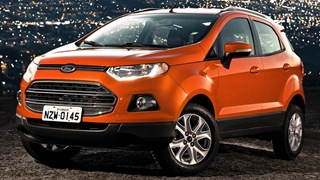
Ford EcoSport 4WD

Clique para ver em alta resoluçãoQuem disse que a Ford quis esperar? Se a apresentação oficial das duas novidades do EcoSport de segunda geração fazia pensar que ele só as receberia no começo do ano que vem, o modelo acabou recebendo o câmbio PowerShift já em 2012, poucos dias atrás. E quando menos se espera, a montadora não perde tempo e já passa a oferecer a tração integral para seu crossover de sucesso. Mas além do ato de oferecer esses itens a Ford merece crédito também pela forma como o fará. É o que você vai entender lendo este artigo.

Quem já leu o artigo deste blog sobre a chegada do tal câmbio automatizado ao novo EcoSport provavelmente chegará a este novo texto com curiosidade sobre o que a Ford fez para manter o alto nível que estabeleceu para o jipinho. Pois a resposta mais uma vez vem do exterior: o sistema de tração integral vem do recém-reprojetado Escape, que também será vendido como o novo Kuga (um nome vai para os EUA e o outro para a Europa) e que no Brasil competiria entre os crossovers médios. Trata-se de um sistema de operação permanente, que opera em conjunto com os controles de tração e estabilidade para que o carro tenha sua rodagem eletronicamente monitorada a todo momento, permitindo que sempre se tenha uma distribuição eficiente de torque entre os eixos. Mas nem por isso ele perdeu aquele botão 4WD no painel, que fez a fama dessa versão na geração anterior: aqui a tração integral nunca se desativa, mas a tecla serve para dar força extra para as rodas traseiras. Este carro outra vez vem sem marcha reduzida porque incursões off-road profundas demais realmente não são a sua intenção. Mas ele supre parte de sua falta com o câmbio manual exclusivo: suas seis marchas têm escalonamento mais curto que a transmissão das demais versões.

Outra troca interessante é a suspensão, que abandona o eixo de torção dos EcoSport 4x2 pela multibraço independente com barra estabilizadora, que tendem a melhorar o comportamento do carro. Além disso, ele traz protetor de cárter e rack de teto de série, além de manter os pneus de uso misto e os 20 cm em relação ao solo da versão FreeStyle. Mas mencionar esta versão leva à grande sacada da Ford com as versões. Oferecer um carro em versões demais termina subdividindo seu público de forma tal que nenhuma alcança vendas grandes. Então, em vez de criar uma opção nova só para o câmbio automatizado e outra só para a tração integral, a Ford preferiu adaptá-las ao que já havia criado para a oferta inicial. A partir daí, o pulo-do-gato consistiu apenas em usar o bom senso: esquecer a troca de marchas é algo que combina muito mais com quem leva as versões urbanas do modelo, como a Titanium do carro laranja das imagens. Já a tração 4x4 é a alegria dos que preferem o visual mais aventureiro e informal… caso da versão FreeStyle. Esta passa a ser o único nível de acabamento do novo EcoSport que recebe o sistema AWD, com o mesmo excelente pacote de itens de série da opção equivalente com 4x2 mas custando R$ 66.090. O único opcional é o kit de airbags laterais e bancos de couro, que adiciona R$ 3.700.

Read more > Ford EcoSport 4WD

Sunday, December 2, 2012

Volkswagen Tiguan R-Line

Clique aqui para a versão em alta resoluçãoLembra dos pacotes de acessórios M Sports e AMG Sports de BMW e Mercedes-Benz? Eles são o mesmo que a Audi oferece para seus modelos como a linha S-Line, que por sua vez serviu de inspiração para a irmã VW criar a sua gama com nome parecido. Trata-se de um “meio-caminho conceitual” entre as tão aclamadas versões esportivas dos carros desses fabricantes e suas variantes mais baratas, mesmo que às vezes um desses conceitos a conectar nem exista. É o caso do carro que você conhecerá neste artigo.

Essa tão repetida questão parte da aura de desejo que os carros esportivos exercem sobre os entusiastas automotivos. A maioria desses sonhos tem como imagens mais frequentes os bólidos de marcas como Ferrari ou Porsche, mas nas últimas décadas as demais montadoras também conseguiram uma forma de agradar esse grupo de fãs. Criar versões de alto desempenho de modelos urbanos como Golf ou Série 3, desde várias décadas atrás, foi uma decisão de enorme sucesso porque permitiu aproximar o objeto de desejo de quem o deseja. Tornou-se possível aceder à tal performance melhorada e ao visual diferenciado sem deixar de lado as praticidades cotidianas de um sedã ou uma minivan. A partir daí, essa tendência foi seguida tantas vezes que as marcas passaram a usar nomes fixos: Alfa Romeo Quadrifoglio, Audi S e RS, BMW M, Chevrolet SS, Dodge R/T, Ford ST… A variedade é enorme, mas o passar dos anos mostrou que ainda havia um nicho a preencher. Afinal, por um lado o mercado consumidor começou a querer incrementar o visual dos mais variados segmentos de carros, mas ao mesmo tempo percebia que as estradas em geral vêm ganhando limites de velocidade cada vez menos propensos a viajar a 200 km/h ou mais. Sendo assim, como seria eliminar a parte dos motores exclusivos e economizar um bom valor levando apenas a aparência especial?

Volkswagen Tiguan R-LineEssa ideia contraria por completo o conceito original de veículo esportivo, mas isso é um fato tão inegável quanto o de que ela vem agradando em cheio a muita gente. Basta lembrar do que se citou no começo deste artigo: a especialidade dessas linhas não passa dos acessórios visuais, exatamente como o que se vê neste Tiguan, que chega ao Brasil com o preço inicial de R$ 114.770. O kit R-Line lhe dá parachoques mais agressivos, saias laterais e spoiler traseiro na cor da carroceria, molduras nos paralamas e as belas rodas exclusivas de 18”, além dos logotipos alusivos. Além disso, o interior recebeu mais detalhes em alumínio, teto na cor preta e mais logotipos. Isso dá ao crossover visual muito mais chamativo que as versões comuns, mas sem diferenças absurdas de preço porque ele mantém o 2.0 TSI de sempre, com potência de 200 cv e torque de 28,5 kgfm e que vem associado ao câmbio automático de seis marchas e à tração integral 4Motion: este conjunto permite aceleração de 0 a 100 km/h em 8s5 e velocidade máxima de 207 km/h. Outra particularidade do Tiguan R-Line é a oferta de opcionais em kit fechado: bancos esportivos em couro com apoios de cabeça especiais, pedaleiras em alumínio e volante multifuncional com borboletas para trocas de marcha lhe elevam o preço a R$ 126.169.

Read more > Volkswagen Tiguan R-Line

Saturday, December 1, 2012

Toyota RAV4 4

Click here to see the high-res versionToyota’s biggest presentation at the Los Angeles Auto Show is also a big, four-wheeled contrast. This very famous crossover used the North-American event to make the worldwide debut of its fourth generation, but this moment can be seen in two different ways: some can complain that it became only one more crossover like the dozens there are released each year, while others applaud Toyota for using a proven-success formula to promote their brand new visual identity. After reading this article, which side will you take?

Do you remember the first-generation RAV4? The year of 1994 received a tiny two-colored Toyota which was very similar to Suzuki Vitara in both style and conception: in that distant era when nobody referred to cars with “crossover”, these Japanese brands showed their cars wanting nothing more than reducing the normal off-road size and wrapping it in a funner and more casual design, which was helped by the removable roofs. It wasn’t difficult for RAV4 to achieve success around many countries, which led Toyota to expand its offer into a five-door version, with bigger space to seat five but with a more familiar approach, investing in a more classic appearance. And this was enough to make it worth receiving a whole new generation in 2000. The car took this opportunity to evolve its original concept, giving it a much more modern design and more sophistication, even though losing the “direct connection” with the sky. But at this time RAV4 faced a different market, which started to prefere two-door cars only in sporty or cheap versions. So the third generation came in 2005 with the opposite of the initial idea: there was only a five-door option and a more urban design than ever, with several style items that weren’t even close to resemble that 1990s little 4x4 which seemed to be ready for any obstacle.

Toyota RAV4 4But there’s no argument with numbers, specially when they’re bringing cash. Even though this car debuted with a very nice idea at that time, in nowadays people seem to have decided what they really want to drive. So instead of insisting on that Sunday-beach body, Toyota reprojected their “Recreational Active Vehicle with 4-wheel drive” as a true urban crossover, with bigger size and much more sophistication – if the first two phases shared Corolla’s platform, it passed to using Camry and Venza’s. The urban dedication comes with hiding the spare tire under the car, instead of carrying it on the trunk lid as it used to. However, it’s undeniable that this enables RAV4 to show the mentioned Toyota’s new style rules: the front became more aggressive by joining the headlights and the grille into one V-shaped element, which is only divided by the brand logo. Besides that, the entire car became more elegant, using straight lines with nothing but the right size of volumes and creases, not to mention the tail lights: the beautiful horizontal design shown by the pictures leads to very high expectations for cars such as the next Corolla. The interior brings more luxury than ever, with plenty of space for five occupants and items such as dual-zone air conditioner, reverse gear camera, blind spot monitor and eight airbags. The s traction now works only on demand, and the V6 engine was dropped: there will be only the 2.5 with 170 hp and a new automatic transmission, with six speeds.

Read more > Toyota RAV4 4

Saturday, November 24, 2012

Ford EcoSport Powershift

Clique aqui para ver em alta resoluçãoChegou ao país uma das mais modernas transmissões automotivas da atualidade. Mesmo com o incrível início de vendas, o novo EcoSport mostra que não pretende dormir sobre os louros: sua primeira medida foi incorporar novas combinações de motor e acabamento para aumentar o potencial da versão Titanium, mas sua exibição no Salão do Automóvel prometia muito mais: se a Ford deixou a tração 4x4 para o ano que vem, agora já se pode comprar o primeiro veículo com câmbio de dupla embreagem fabricado no Brasil.

Usar a plataforma do New Fiesta foi um excelente ponto de partida para a Ford executar a ideia de modernidade que este carro tanto exalta. O exterior transpira esportividade visto de qualquer ângulo, com linhas fortes e volumes muito bem esculpidos que conferem uma sensação de imponência e dinamismo sem recorrer a dimensões exageradas, o que certamente desestimularia seu uso urbano. O interior também segue a cartilha de sucesso usada pelos últimos Ford em todo o mundo, com a interpretação da “filosofia Kinetic” feita no design mas também com uma generosa aplicação de tecnologia, tanto em prol do conforto como da segurança. Também há resposta a esse “jeito de ser” nas duas opções de motor, então a Ford não podia seguir essa proposta em “quase todos” os aspectos: se o mercado mostrou aceitação satisfatória para transmissão automática nesse tipo de carros, eles quiseram repeti-la. E se eles querem que este carro seja o mais moderno da categoria, precisaram apostar alto. A transmissão automatizada Powershift já é muito usada nos Ford do exterior, e vem colecionando elogios porque seu alto nível de tecnologia se traduz em funcionamento sem comparações.

Vale lembrar que este câmbio não muda a forma de uso do motorista em relação a qualquer outro automatizado. Ou seja, continua-se selecionando entre P, R, N e D e esquecendo-se do terceiro pedal. A diferença está em que as duas embreagens trabalham em forma alternada, uma com as marchas pares e outra com as ímpares: quando se está usando uma marcha, a outra embreagem já prepara a seguinte para a troca. Isso não só reduz o tempo da troca como evita a interrupção do torque, fazendo que o motorista na prática não as perceba: o carro acelera e desacelera em forma contínua, sem solavancos ou quaisquer desconfortos do tipo. Mas além do dirigir mais agradável, a Ford afirma que essa caixa traz consumo 10% menor que o de uma automática convencional. Fora que a Powershift não usa bombas, fluidos ou radiadores, o que leva a afirmar que ela não precisa de manutenção durante sua vida útil, que é de dez anos ou 240 mil km. O carro mantém a opção de trocas manuais em sequencia e modo esportivo para as duas formas, permitindo ao dono escolher entre conforto ou diversão. Quanto ao mercado, como a versão FreeStyle vende bem sem nenhuma ajuda, a Ford aplicou a novidade às demais: sempre com o 2.0 16v de 147 cv, a SE começa em R$ 63.390 com o novo câmbio e a Titanium em R$ 70.890 – esta pode somar bancos de couro e airbags laterais e ficar em R$ 74.590.

Read more > Ford EcoSport Powershift

Tuesday, November 20, 2012

Peugeot 3008

Peugeot 3008This is another case of car release shortly after the “accidental” exposure of some pictures on the Internet. The new 3008 brings a very similar solution to RCZ’s because the idea is actually the same: apply some minor updates to boost the sales at this second half of their lifecycle, leaving the more expensive changes to their next generations or successors, which can be expected only in four or five years. Meanwhile, Peugeot’s mid-size crossover still excels on what has always distinguished it from all the crossovers of nowadays.

This facelift is signed by the Chinese joint-venture Dongfeng-Peugeot, which will restrict some of the changes to that market. However, it’s highly expected that the other markets will also receive this excellent visual result. Once again, this restyling was successful because it managed to update the car, instead of discharacterizing it with heavy changes in some parts and maintaining others. It’s impressive to notice how the French automaker’s latest visual identity didn’t take much effort to be applied at 3008. The air intake was replaced by a smaller and more horizontal one, with chrome lines and placed between the brand logo and the license plate. The fog lights became visually separated and received a bigger area, with a chrome boomerang-shaped detail that reminds 308’s LEDs row, while the hood received stronger lines. But the biggest compliments go to doing all that without touching the headlights: the updates were so well-made that those parts didn’t need any change: in fact, they fit the new look even with it being based on horizontal elements, while the original one used vertical bigger items. Besides that, there are only new wheels and a roof rack, without any changes to the rear. An unusual restyling went to the third side window, behind the back doors: they received a more elegant design, with bigger size at the lower portion to improve visibility.

Peugeot 3008However, mentioning that a successful facelift only updates the car means 3008 is still a crossover with “a hint” of minivan, which makes it very different from its SUV-inspired rivals. The cabin has plenty of space for five passengers, with a beautiful central console and lots of the current trends, such as the big touchscreen for the GPS navigation and to control several car functions. The 2013 update brought new color options and external LED daylights, but internally there’s only a new sound system, redesigned steering wheel and the optional parking cameras and ventilated seats. This car will be sold in China always with front traction and automatic six-speed transmission, whether with the 147-hp 2.0 or the 163-hp 1.6 THP. The second option composes the most expensive version, which is imported from France for 240.000 RMB. This car will make its official debut at the next Guangzhou Motor Show.

Read more > Peugeot 3008

Saturday, November 17, 2012

Honda Crosstour 2013

Click here to see the high-res versionSome articles ago this blog has mentioned the huge importance of respecting each market’s preferences when it comes to cars, due to the simple reason of this being how to give the customers what they want. The eighties have proved that imposing the same vehicle to many countries doesn’t sell well, although the mathematics prove that sharing parts between several cars reduces production costs. This “economical art” is what stimulates the release of cars such as the Nissan Titan of said article, and the crossover you’ll read about here.

Crosstour is a good example of that combined strategy because it filled a gap in Honda’s North-American showroom without demanding an exclusive project. In other words, if CR-V is a small crossover and Pilot is a s-size SUV, they managed to put the new car between them in size and with a much more sporty proposal, so the three don’t converge into attracting the same public, using no more than the US Accord’s platform. This car is a conceptual rival for Toyota Venza, and both of them work as cheaper versions of BMW X6’s idea: starting from the typical crossover base, they exchange the five seat’s space for a much more casual style, giving a urban look instead of resembling an SUV. 2013 will see a slightly facelifted Crosstour, whose biggest visual changes are a cleaner-designed and more imponent front. The front and size pictures show that this car has a really elegant resemblance with the youngest Accord and Pilot, but Honda’s problem was don’t knowing when to stop: there’s a black plastic part right above the rear license plate, which tries to remind CR-X’s (and its hybrid successor CR-Z’s) two-party windshield – besides those cars used this solution to improve the aerodynamics, splitting it with a big spoiler makes this area unattractive to a crossover with much bigger size.

Honda Crosstour 2013However, it’s undeniable that Honda’s crossover is very stylish. This fastback-like design gives it a bigger dynamism sensation than Venza and even X6 because those ones have taller rear ends. But if they haven’t done their best with the rear design, the interior has improved a lot. There are design changes to give a “tougher look”, material changes to improve the overall quality and a new multimedia entertainment system, with a big touchscreen on the central console. Opening the hood reveals the biggest improvement: Crosstour has received the new Earth Dreams engines. This new family uses lots of technology to reduce consumption and emissions, and here is shown with a 192-hp 2.4 and a 278-hp V6 3.5, this one with s traction available. Those are a more sophisticated interior and more efficient engines to a car which preserves the huge internal space seen at the pictures. Since this car’s sales are exclusively focused in North America, it makes total sense that Honda showed the concept-car at the last New York Motor Show and now plans to show the official version at the Los Angeles show. Its sales will begin right after, starting from US$ 27.230.

Read more > Honda Crosstour 2013

Tuesday, November 13, 2012

Subaru Forester 4

Click here to see the high-res versionThis car’s discreet design doesn’t boast it, but this is the fourth generation of a true pioneer. Forester will debut its new shapes at the upcoming Los Angeles Motor Show, but the official information was first shown today. Analyzing this car becomes interesting when it’s noticed how Subaru has managed to follow many of the latest car trends at the same time they kept a lot of Forester’s original concept, first shown in 1997. Those connections and their most recent result are what you will read at this article.

All this pioneering comes from the fact that Forester was one of the first cars to express the crossover concept, which in nowadays is completely spreaded among the biggest automakers. Defining only one foundator of this car category is impossible specially because the idea of concentrating several proposals at one single car has been widely used by lots of vehicles worldwide, which even includes Volkswagen Kombi’s first years. Having this considered, it becomes easy to understand why the last decades had lots of cars trying to practice some sort of alchemy in order to find which pair of categories would be more successful to offer simultaneously. From Chevrolet Lumina APV’s futuristic attempt of creating a sports minivan to Pontiac Aztek’s inexplicably hideous interpretation of a family SUV, most of those cars unfortunately had much more inspiration than sales success. However, there were some particular vehicles starting to prosper among all those failures. Subaru Forester emerged at the same year of Volvo V70 Cross Country, with the very similar proposal of a halfway who can be observed as a tougher station wagon, with s traction and paintless external parts to withstand dirt and mud, or also as an urban jeep, with better internal space and much more comfort. After all, this one ended up being the golden goose everyone was looking for.

Subaru Forester 1Nevertheless, Forester had a more modest debut than the Swedish station wagon. Its first generation shared platform with the famous Impreza, but nothing of its iconism – in fact, it wasn’t hard to mistake it for Outback, another Subaru which is the station wagon of Legacy. But Forester started to earn great acceptance due to its conceptual differences when it comes to proportions: if Volvo had an upgraded station wagon, the Japanese offered a “domesticated SUV”. Besides that, offering good trim levels at good prices have also helped it to prosper at several markets, including United States. Gradually, this car created a great market performance and deserved not only a second generation, but also a third and the fourth one seen at these pictures. Forester started in a typical 1990s design, with well-separated volumes and plenty of straight creases. The second one was nothing more than an evolution of that, featuring updated lights and windows’ shapes, but the third one entered 2008 with a radical change. At that point the crossovers became a normal car category, with an increasing number of members around the world – Volvo even released two of them, XC90 and XC60. So the Japanese took the opportunity to only adapt their car to what the customers began to search.

Subaru Forester 2That initially mentioned outstanding part concerns about how even though Forester has became closer to a SUV than it was at 1997, Subaru managed to maintain what made it famous in the first place. Instead of following the “recipe” of giving it an attractive design and focusing only at the urban performance, the Japanese applied their latest design rules but keeping Forester’s discretion, resulting at a modern but still imponent style. Besides that, it has increased a little in every direction, achieving bigger internal space. The pictures also show that the car followed some current trends such as the panoramic sunroof and the entertainment system with a big touchscreen at the central console. This car’s sales will offer a boxer 2.5 with 170 hp and a 2.0 turbo with 250 hp, but in markets such as Europe there will be also a boxer diesel 2.0. The transmission options will be a six-speed manual and a CVT automatic for both markets, and the AWD traction has changed to improve the driving at different ground types. Besides that, the pictures show that Forester’s trim levels will bring visual differences, such as sport bumpers, spoilers and exclusive wheel sets. After all, as a typical crossover Forester needs to be up-to-date with the customers’ preferences, in order to attract now both station wagons, SUVs and another crossovers’ buyers, like it has done for the last fifteen years.

Read more > Subaru Forester 4

Friday, November 9, 2012

Ford EcoSport Titanium 1.6

Ele mal foi lançado e já virou sucesso. A nova geração do crossover compacto vem agradando tanto que a Ford decidiu ampliar a oferta nas áreas de maior aceitação para aumentar as vendas ainda mais. A versão Titanium 2.0 16v agora pode vir com bancos de tecido em vez de couro e sem airbags laterais e de cortina para passar de R$ 70.190 da completa a R$ 66.490. Mas ainda mais interessante é que agora se podem levar os dois níveis também com o motor 1.6 16v, o que reduz os respectivos preços para R$ 67.690 e R$ 63.990.

Read more > Ford EcoSport Titanium 1.6
 
 
Copyright © blog
Blogger Theme by Blogger Designed and Optimized by Tipseo