Showing posts with label Volkswagen. Show all posts

Friday, March 15, 2013

Volkswagen Golf Variant 7

Click to see in high resolutionExpect the Germans to restrict Golf only to the hatchback body would be a complete nonsense. Using a multiuse platform such as MQB certainly saves a lot of new cars’ projecting time, which has certainly had a huge responsibility for VW Group having released five of them in such short time, since the latest Seat León. Now it’s time to turn the spotlights once again to the parent brand, because even though this car family isn’t too big, it never misses a chance of having another complete rearrangement.

Volkswagen’s most successful nameplate has been divided in two “groups” since it was five, in 1979. While Opel and Renault, for example, name each member of a car family after the oldest, like Astra Caravan or Mégane Coupé, there are automakers like the North-Americans, which used to sell the same vehicles under different marques, like all the ones who came from the “Project J” around the world. “The Golfs”, however, had the sedan called Jetta since its first generation and using slightly different design, while the station wagon used to follow the hatchback. This situation only started to change at the third phase, when the sedan was called Vento in some countries. The fourth phase, in turn, not only changed this alternative to Bora as also requested the wagon for itself: the biggest sibling still adopted Golf’s front fascia in some markets but others received it with Jetta’s looks, always being badged as the “donor’s” Variant version. The fifth generation actually unified the family for the first time, with all members having one design only changed to each body’s rear, but their bigger sophistication leap raised the prices so much that the situation ended going berserk once again – today, Golf is at the seventh phase to stay as VW’s flagship vehicle, Jetta received an exclusive sixth one focusing on markets such as Brazil and United States and Variant was facelifted at the fifth. Not to mention all the original Bora’s variations still sold in other countries.

Volkswagen Golf Variant 7Nevertheless, it seems the MQB platform will restrict this strange badge engineering once again to nameplates. Giving Variant an entirely new generation may look unnecessary because midsize station wagons don’t have too big sales, but it wouldn’t be surprising if producing this one ends up easier than keeping the older. Despite the obvious advantage of offering a more modern vehicle, having Jetta in a totally separate lifecycle frees VW to enjoy nothing but the good part of a strategy this blog has mentioned with Kia pro_cee’d’s article. Golf’s design has a very horizontal roof with abrupt ending, which would demand several changes to be transformed into a sedan… but very few to create an SW. In fact, it was only a matter of adapting the rear windows to include a subsequent third glass and “stretch” the sheetmetal’s original lines. It’s really nice to see how the new Variant combined creases, volumes and glass to look elegant without looking too long like the previous phase. The new structure didn’t give big dimension increases but a surprising 231-pd weight reduction and a 21.3-cu-ft trunk, which can be expanded to 57.2 cu-ft by folding the rear seats. The pictures show the interior is shared with Golf as much as the powertrain, which uses EA-211 and EA-288 families respectively with gasoline and diesel but both with turbo, direct injection and start/stop system and the available DSG transmission.

Read more > Volkswagen Golf Variant 7

Friday, March 8, 2013

Volkswagen XL1

Click to see in high resolutionEven if your interest for cars doesn’t qualify you as a fan, you’ve certainly heard about concept cars, specially during auto shows. They’re always intended to take everyone’s attention, such as Citroën with Survolt’s design, but the purposes vary. While that one came only to impress at these events, others anticipate the automaker’s future trends. The design ones can come indirectly, like with Ford Evos, but the technological ones come much more clearly, like VW’s latest project to receive the production version.

Volkswagen’s projects of a super-efficient car have been developed for more than a decade, since the first prototype was showed in 2002, the 1-Litre concept car. All those studies have been done under Ferdinand Piëch’s management, which helps to explain the big similarities since the first project to this article’s car: the intention of achieving the lowest possible consumption rates was always there, like with every other automaker, but only VW has specificated it to the special number of 1 l/100 km, which can be expressed also as 235 mpg and 100 km/l and has been achieved since that first vehicle. The challenge, therefore, became adapting the test prototype to the production model. There was another concept car which seemed to take the studies to a different structure, called L1, but the final vehicle has very much in common with the first one. The essential concern with the aerodynamics has been expressed in the streamlined body, which is 153.1 inches long, 65.6 inches wide but only 45.4 inches tall. The wind flow also demanded a narrower rear axle with covered forged magnesium 16” wheels, although bigger and wider than the 15” front set – by the way, there is carbon fiber here, indeed. This car uses it on the monocoque, while other parts combine materials such as aluminum and magnesium. Another good part is that creating a super-efficient vehicle didn’t stop VW of making it look sporty.

Volkswagen XL1The front fascia even follows its current design trend (looks like a compressed Scirocco’s), and there are several items to enhance the design without leaving the rules of aerodynamics: the arch-shaped LED tail lights give a futuristic touch, while the windows with small opening parts remind sports cars like McLaren F1 and the gullwing doors of the old race cars, opening with part of the roof to make the occupants’ entrance easier. The interior abandoned the original tandem configuration to have the seats almost side by-side. The cabin doesn’t expose much luxury, keeping the good impressions to the visible carbon fiber parts and, specially, to the door-panel monitors, which are fed by rearward-facing exterior cameras to serve as rearview mirrors. XL1’s extensive use of lightweight materials pays off at the final 1750 pounds, while dropping 1-Litre’s original aircraft-inspired canopy in favor of a conventional cabin didn’t disturb this car’s drag coefficient, resulting at 0.189. That’s why its hybrid powertrain needs only a two-cylinder 800-cc diesel engine with 48 hp, paired to a 27-hp electric unit to give a combined 69-hp power and 103-lb-ft torque; the DSG seven-speed gearbox with rear traction gives 0-60 mph in 12s7 and the top speed limited to 100 mph. XL1 will start with fifty units sold in Europe, but even if the acceptance spurs more units to be produced, this car’s profit won’t ever come in money. VW’s concern is to adapt most of XL1’s technologies to the conventional cars, just like it was revealed with up!: it’s expected that most of this powertrain is going to be applied to the supermini’s future hybrid version.

Read more > Volkswagen XL1

Friday, February 15, 2013

Volkswagen Cross Up!

Click to see in high resolutionDo you remember that big group of up!’s conceptual versions VW showed shortly after releasing the main one? There were the ecological one, the sporty, the electric… Almost one hatchback for each kind of driver. It took some months, but they’re finally starting to turn into production vehicles. After the four-door body and the eco up! version, now this supermini borrows inspiration from the big brothers around the world and officially follows one of the latest car trends to be successful both in Europe and Latin America.

This trend is nothing more than what was initiated in the late 1990s, with Volvo V70 Cross Country in Europe almost at the same time as Fiat Palio Adventure in Brazil, which could be defined as a “prequel” to the current crossovers. In other words, the right proportion between off-road capacities and urban-car conveniences were already been searched for years, but those two’s concept was the first one to achieve considerable success. It was nothing more than adding items like elevated suspension and off-road tires to urban vehicles – the station wagons must’ve been chosen probably for being similar to the actual SUVs – along to very attractive visual accessories. This formula such good acceptance that started to spread around more countries, but specially around the automakers and their lines. Hatches, pick-ups, minivans and even compact crossovers, in nowadays almost everyone offers at least one “urban off-road”, despite of this name being a huge paradox. However, having such this variety of these cars led the buyers to draw more specific preferences with them. The biggest difference turned out to be whether to offer the typical off-road characteristics or not. Items such as four-wheel traction, differential lock and special tires became preferred by the upscale market, whose customers have more frequent trips around off-road tracks, like to non-urban properties.

Volkswagen cross up!On the other side, the lower-budget customers started to give more attention to other aspects when looking for one of these cars. Besides of having smaller prices, giving away those more specific technologies was the right decision also because almost all of them travel mostly in streets and highways. In Volkswagen’s showroom, for example, those are the reasons why Golf 4Motion suits the first group better and CrossGolf suits the second. And since up! is the brand’s entry-level car, it only makes sense as it actually comes: since there aren’t any deep changes, it comes only as a new version. Therefore, cross up! has added nothing more than exclusive bumpers with bigger front grille and gray painting, black plastic fenders and side protectors, roof rack and the beautiful 16” wheels – internally, it’ll only offer the red-and-black coating seen in the pictures, which has received some minor styling changes compared to the original options; as the pictures show, this car’s effort is to look cute, and specially slightly different from the urban up!, rather than giving impressions that it could climb mountains or cross deep rivers. This is what the customers expect from this car’s price range and nothing more, actually both in Europe and Latin America. Since the intention is to sell cross as an upmarket trim it’ll only come in four doors, but conserving the three-cylinder 1.0L with 70 hp, the front-wheel-drive and the five-speed manual transmission, starting at € 13.925 in Germany.

Read more > Volkswagen Cross Up!

Thursday, February 14, 2013

Volkswagen Logus (1993-1996)

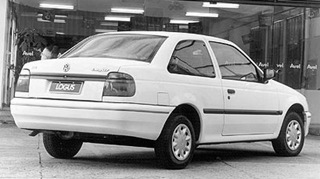
Clique para ver a galeria de fotos no FacebookSó na primeira impressão ele já redimiria o Apollo. As belas linhas nem pareciam parentes do Escort porque a Autolatina partiu da plataforma, em vez do rebatismo de antes. Perdendo em luxo só para o Santana, ele deveria ser um médio muito bom… se não fosse pelo Verona. A mecânica do Ford deixava o Logus macio demais para um VW, sua própria existência lhe vetava as quatro portas, e só a vinda do AP 2.0 melhorou o desempenho dos 1.6 e 1.8 do início. Mas a Wolfsburg Edition lhe fez cair com a Autolatina sem perder o estilo.

Read more > Volkswagen Logus (1993-1996)

Thursday, January 31, 2013

Volkswagen Golf 4Motion

Click to see the rear pictureAfter that Scandinavian group test whose photos were spreaded all over the Internet, the first member of the seventh-generation Golf siblings is now released. The all-wheel-drive system is now produced by Haldex and became more efficient: the equipment became lighter and has faster power management between the axles according to the demand, which also results at a 4.54 l/100 km fuel consumption. This system will be initially offered with the TDI 105-hp 1.6L and 150-hp 2.0L diesel engines, with a price addition of € 1.800.

Read more > Volkswagen Golf 4Motion

Friday, January 18, 2013

Volkswagen Gol e Voyage 1.6 2013

Clique para ver uma foto do VoyageEste tipo de notícia vai ser muito frequente no decorrer deste ano. Logo depois de a Volkswagen fazer a linha completa do Fox sair de fábrica com airbag duplo e freios ABS de série, é a vez de a linha de entrada receber os equipamentos de segurança em algumas de suas versões. Para atender as resoluções do Contran de ter 60% dos modelos atuais com os itens, agora sua oferta se estende de série a todas as versões de hatchback e sedã que contam com o motor 1.6 de potência de 101/104 cv e torque de 15,4/15,6 kgfm.

Read more > Volkswagen Gol e Voyage 1.6 2013

Friday, December 28, 2012

Volkswagen Fox 1.0 2013

Clique para ver em alta resoluçãoMais um veículo brasileiro se antecipa à obrigatoriedade que valerá em 2014. Dessa vez é o segundo degrau da linha de compactos da marca alemã que incorpora airbag duplo e freios ABS como itens de série em todas as versões que trazem o motor 1.0 flex, que por sua vez gera potência e torque de 77 cv e 10,6 kgfm. Com isso o Fox passa a sair de fábrica trazendo estes equipamentos em toda a sua gama, mas naturalmente isso trouxe um acréscimo à lista de preços básicos: as versões 1.0 ficaram R$ 1.350 mais caras.

Read more > Volkswagen Fox 1.0 2013

Monday, December 24, 2012

Volkswagen Golf R Cabrio

Click to see in high resolutionSometimes, the “recipe” for creating a successful vehicle doesn’t demand millions of dollars invested in projecting new models from scratch. Complete renewals are always necessary after a certain time, but there are moments when it’s possible to make interesting additions to the showroom using mostly creativity and common sense. And since everyone likes to have good results and loves to have them without spending much money, that’s why VW decided to satisfy a popular request, now releasing this impressive convertible.

It’s interesting to observe that although Golf is a very traditional car, the families it generates on each generation never are. The sedan, for example, has followed it since the beginning but always with exclusive designs and different timing. The station wagon came only at the third phase and the fifth even had the Plus minivan variation, but the less common history surely is the convertible’s: adapting a conventional car to become roofless demands structural reinforcements and the entire removable roof system, which always raises the car’s cost. Therefore. in order to never have this cabrio too expensive, VW has used some special strategies. The second generation simply skipped this version, receving once again at the third. The fourth, in turn, was a very crafty facelift to give the new car’s front and rear styling to the older convertible. The fifth generation skipped the convertible again, and the sixth one receives it at the exact time when the seventh arrives. This doesn’t look like bad timing, though: since the new car uses an entirely different project, it seems like VW is trying to compensate the convertible’s higher costs by producing it on an already proven base. Anyway, the fact is this convertible only begins to describe a very nice example of what this article begins to comment.

Volkswagen Golf R CabrioletIn other words, besides the opportunity to keep selling Golf’s old platform for some time, since VW was releasing this very charismatic variation, why don’t take more advantage of it? Now it’s time to adapt the R version for the roofless version. There are the same elements of the hatchback, such as exclusive bumpers with more aggressive intakes and double exhaust tips, rear spoiler, 18” exclusive wheels (with an optional 19” set), lower suspension and the typical blue tone of the R line. The black fabric roof can be activated while driving at up to eighteen mph and takes eleven seconds to open or close. This car’s interior won’t be very different from what has been seen at this Golf’s phase, but once again the equipment list will be complete, including items such as bi-xenon headlights with daytime LEDs, performance seats and black-painted calipers, but the most awaited powertrain specifications to know definitely weren’t those: this car will bring once again the 2.0L TSi. There are 261 hp of power and 258 lb-ft of torque, paired to DSG transmission in order to achieve 6s4 from 0 to 60 mph and the electronically-limited 155-mph top speed. These numbers are so good that give this car the title of fastest VW convertible ever produced… along with a 8.26-l/100 km consumption, and the reminder that all of this was achieved with the exact opposite of projecting from scratch.

Read more > Volkswagen Golf R Cabrio

Monday, December 10, 2012

Volkswagen Amarok 2013

Volkswagen Amarok 2013Além da nova cor marrom Toffee, as maiores novidades da picape média são um sistema para aliviar o peso da tampa da caçamba durante a abertura e mais itens de série: a versão Trendline (foto) ganhou o sistema de som multimídia com Bluetooth, tendo farois de neblina e sensores de estacionamento como opcionais. Já a versão de topo, Highline, soma retrovisor fotocrômico, sensores de chuva e crepuscular e o sistema Coming & Leaving Home. O demais continua inalterado, mas com a tabela de preços reajustados que segue.

Amarok S Cabine Simples 4x4: R$ 84.470
Amarok S Cabine Dupla 4x2: R$ 87.830
Amarok S Cabine Dupla 4x4: R$ 91.670
Amarok SE Cabine Dupla 4x4: R$ 98.870
Amarok Trendline Cabine Dupla: R$ 109.910
Amarok Trendline Cabine Dupla (automática): R$ 116.150
Amarok Highline Cabine Dupla: R$ 124.310
Amarok Highline Cabine Dupla (automática): R$ 130.550

Read more > Volkswagen Amarok 2013

Tuesday, December 4, 2012

Volkswagen Fusca

Clique para a versão em alta resoluçãoVocê certamente já ouviu falar no termo “compactos de imagem”. Trata-se de mais um nicho de mercado criado nos últimos anos, assim como os crossovers e os cupês de quatro portas, mas com inspiração diferente. Esta é a categoria que ganhou fama com nomes como Fiat 500 e Mini Cooper, e que vem mostrando interessantes competições graças ao contraste com membros futuristas como Audi A1 e Citroën DS3. Mas até então uma grande injustiça vinha sendo cometida em silêncio. É o que a VW pretende reverter com este carro.

Tal injustiça vem de que o então chamado New Beetle nunca recebia menções nas publicações da imprensa referidas a esta categoria de carro… mesmo sendo o primeiro modelo a surgir no mercado com esta ideia. Por outro lado, não é descabido pensar que seu problema foi justamente a chegada prematura: naquele final dos anos 1990, a ideia da VW era apenas criar uma versão moderna de um dos seus carros mais famosos. Como até então ninguém tinha tido ideias parecidas, a única regra seguida pelos alemães foi a própria ideia original. O resultado foi um carro apenas vagamente inspirado no Fusca original, não só pelo desenho mas também pela tecnologia, que era a melhor que os alemães tinham à disposição no momento. O carro virou uma compra emocional e com preço e tamanho equiparados ao de um Golf, e com isso ficou muito distante do antecessor. Poucos anos depois vieram os compactos inglês e italiano já mencionados, mas compartilhando o tamanho bem menor e a tendência de estilo “retrô” mais intensa, fazendo que eles começassem a ser comparados entre si, e não com o modelo da Volkswagen. A evolução dessa situação foi que mesmo com o VW ganhando versão conversível e vendendo bem, ele sempre seguia em paralelo a carros que na verdade compartilham sua raison d’être.

Volkswagen Fusca 1As imagens revelam que a intenção da VW não passou por reduzir o tamanho do agora chamado Beetle. Ele mantém o conceito de “carro moderno que relembra o Fusca”, mas a grande diferença foi passar a enfatizar a segunda parte deste slogan. Ele volta a oferecer o melhor da tecnologia de sua marca, mas as mudanças visuais que recebeu tiveram o objetivo de aumentar a semelhança visual com o antecessor: o teto ficou mais baixo, o capô mais longo e a queda da traseira mais arredondada. Os alemães querem que ele perca o status de “carro feminino” da primeira releitura, e para isso apostaram na esportividade. Começaram com itens como rodas grandes, detalhes cromados sem excessos e itens que viraram a última moda entre os carros, como o teto solar panorâmico, mas terminaram com a ideia que na verdade deveriam ter tido desde a fase anterior: em vez de padronizar o nome norteamericano, o “novo novo Beetle” receberá o apelido que o carro original recebeu em cada país que foi comercializado. E é isso que faz nosso mercado voltar a conviver com o nome Fusca sob holofotes depois de dezesseis anos, ainda que holofotes bem diferentes. Afinal, basta lembrar que o preço inicial do novo carro será R$ 76.600 para entender que a maior ligação que este carro vai formar com o antecessor está nas memórias que esse nome vai despertar em muita gente.

Volkswagen Fusca 2Um ponto de vista puramente técnico vê este carro como uma versão informal do Golf, porque eles têm dimensões e tecnologia parecidas mas desenhos tão diferentes quanto entre Fiat 500 e Palio, por exemplo. O novo Fusca chega ao Brasil com qualidade europeia por fora e na cabine, que por sua vez apresenta muito bom gosto com a inspiração retrô presente sem atrapalhar a modernidade geral; o espaço é honesto para apenas quatro pessoas, como é natural nesta categoria. Seus itens de maior destaque são bancos e volante em couro, central de entretenimento com touchscreen no console central, sistema de som multimídia com oito alto-falantes e luz ambiente em três tonalidades, além do pacote de segurança que conta com airbags frontais e laterais, controles de estabilidade e tração e freios com ABS e EBD. Já o volante com base chata e os instrumentos adicionais acima do console revelam a vocação esportiva: este Fusca sempre trará o 2.0 TSI de 200 cv usado em vários modelos da marca, com câmbio manual de seis marchas. Ainda é possível equipá-lo com o câmbio DSG, volante multifuncional e itens de luxo como farois bixenônio, os mencionados teto solar, rodas de 18” e as luzes diurnas em LED, sistema de som Fender, entrada sem chave, sistema ParkPilot e outras opções de revestimento dos bancos, entre outros. Mas equipado com tudo isso, quando você poderia imaginar que um Fusca passaria dos cem mil reais?

Read more > Volkswagen Fusca

Monday, December 3, 2012

Volkswagen CC

Clique aqui para ver em alta resoluçãoOutro dos lançamentos reservados para o recente evento da VW foi a nova fase de seu cupê de quatro portas. Como a família Passat ainda está longe da época de mudar de geração, depois de sedã e perua receberem seu primeiro facelift na fase atual, agora chega a vez de atualizar o irmão “subversivo”. Mas em vez de lhe aplicar uma mera re-estilização, os alemães buscaram aproveitar seu conceito diferente para lhe dar independência, com mudanças pequenas mas de importância conceitual muito grande.

Esta mudança de nome foi o perfeito símbolo para a ideia que se quer passar com este carro a partir de agora. Assim como o carro que lhe serviu de inspiração, o conterrâneo Mercedes-Benz CLS, o então Passat CC surgiu como uma alternativa mais informal à tradicional linha de luxo da VW. A intenção é cativar a parcela dos clientes que aprecia as qualidades desses carros mas não gosta da sobriedade que lhes caracteriza. Então, assim que esse nicho foi detectado bastou deixar o bom gosto trabalhar para aliar esportividade e elegância no que seria o “traje esporte fino” dos carros: a própria denominação “cupê de quatro portas” já antecipa a dualidade de conceitos que esses carros carregam. Esta versão do Passat vem se mostrando um tiro certeiro tanto quanto o CLS, com o agravante de que sua dirigibilidade tão elogiada é um excelente par para a proposta que ele traz. Então, a VW aproveitou a época de redesenhar o carro para investir mais nesse novo conceito. As linhas mais retas que ganhou lhe dão personalidade própria, em especial quando se lembra da ditadura estilística que enfrentam os modelos mais recentes da marca. O CC ficou ainda mais elegante porque abandonou a esportividade explicitada por spoilers e aerofólios para apelar ao potencial de seu próprio conceito, reforçando elementos como a largura da carroceria bem maior que a altura.

Volkswagen CCEntretanto, por mais independente que este carro tenha virado na nova fase, sua relação com os Passat convencionais não se perdeu. Primeiro porque eles compartilham o projeto e são muito parecidos visualmente, mas a principal razão é que a VW realmente não tem motivo de desvencilhar este carro da linha que só perde em sofisticação para o Phaeton, mas que em seu segmento conta com muito mais carisma que aquele – eles só deixaram implícito o parentesco entre o CC e seus irmãos sedã e Variant. E como era de se esperar, este carro teve diversas melhoras de equipamentos: sua lista ganhou o sistema OPS de câmeras para exibir os arredores do carro em 360° e a nova geração do Park Assist, o famoso assistente de baliza. Todo o demais se manteve, o que vai desde itens como ar-condicionado digital, entrada sem chave e farois bi-xenônio com LEDs diurnos e um pacote de segurança que inclui seis airbags, sensor de fadiga e controle de estabilidade até toda a qualidade dos materiais usados na cabine, com acabamento impecável. O motor é o mesmo 3.6 V6 FSI de antes, com potência de 300 cv e torque de 35,6 kgfm e que usa o câmbio DSG de seis marchas com tração integral 4Motion – este carro vai de 0 a 100 km/h em 5s5 e chega à velocidade máxima de 250 km/h. Ele conta com oito opções de cor externa, duas para o painel e três para o couro Nappa. O CC começa em R$ 208.024, fora os opcionais.

Read more > Volkswagen CC

Sunday, December 2, 2012

Volkswagen Tiguan R-Line

Clique aqui para a versão em alta resoluçãoLembra dos pacotes de acessórios M Sports e AMG Sports de BMW e Mercedes-Benz? Eles são o mesmo que a Audi oferece para seus modelos como a linha S-Line, que por sua vez serviu de inspiração para a irmã VW criar a sua gama com nome parecido. Trata-se de um “meio-caminho conceitual” entre as tão aclamadas versões esportivas dos carros desses fabricantes e suas variantes mais baratas, mesmo que às vezes um desses conceitos a conectar nem exista. É o caso do carro que você conhecerá neste artigo.

Essa tão repetida questão parte da aura de desejo que os carros esportivos exercem sobre os entusiastas automotivos. A maioria desses sonhos tem como imagens mais frequentes os bólidos de marcas como Ferrari ou Porsche, mas nas últimas décadas as demais montadoras também conseguiram uma forma de agradar esse grupo de fãs. Criar versões de alto desempenho de modelos urbanos como Golf ou Série 3, desde várias décadas atrás, foi uma decisão de enorme sucesso porque permitiu aproximar o objeto de desejo de quem o deseja. Tornou-se possível aceder à tal performance melhorada e ao visual diferenciado sem deixar de lado as praticidades cotidianas de um sedã ou uma minivan. A partir daí, essa tendência foi seguida tantas vezes que as marcas passaram a usar nomes fixos: Alfa Romeo Quadrifoglio, Audi S e RS, BMW M, Chevrolet SS, Dodge R/T, Ford ST… A variedade é enorme, mas o passar dos anos mostrou que ainda havia um nicho a preencher. Afinal, por um lado o mercado consumidor começou a querer incrementar o visual dos mais variados segmentos de carros, mas ao mesmo tempo percebia que as estradas em geral vêm ganhando limites de velocidade cada vez menos propensos a viajar a 200 km/h ou mais. Sendo assim, como seria eliminar a parte dos motores exclusivos e economizar um bom valor levando apenas a aparência especial?

Volkswagen Tiguan R-LineEssa ideia contraria por completo o conceito original de veículo esportivo, mas isso é um fato tão inegável quanto o de que ela vem agradando em cheio a muita gente. Basta lembrar do que se citou no começo deste artigo: a especialidade dessas linhas não passa dos acessórios visuais, exatamente como o que se vê neste Tiguan, que chega ao Brasil com o preço inicial de R$ 114.770. O kit R-Line lhe dá parachoques mais agressivos, saias laterais e spoiler traseiro na cor da carroceria, molduras nos paralamas e as belas rodas exclusivas de 18”, além dos logotipos alusivos. Além disso, o interior recebeu mais detalhes em alumínio, teto na cor preta e mais logotipos. Isso dá ao crossover visual muito mais chamativo que as versões comuns, mas sem diferenças absurdas de preço porque ele mantém o 2.0 TSI de sempre, com potência de 200 cv e torque de 28,5 kgfm e que vem associado ao câmbio automático de seis marchas e à tração integral 4Motion: este conjunto permite aceleração de 0 a 100 km/h em 8s5 e velocidade máxima de 207 km/h. Outra particularidade do Tiguan R-Line é a oferta de opcionais em kit fechado: bancos esportivos em couro com apoios de cabeça especiais, pedaleiras em alumínio e volante multifuncional com borboletas para trocas de marcha lhe elevam o preço a R$ 126.169.

Read more > Volkswagen Tiguan R-Line

Wednesday, November 21, 2012

Volkswagen Bora 2

Click here to see the high-res versionThe biggest car market in the world is certainly also the hardest to comprehend. The strategy of creating regional projects to be sold only at certain markets is very common to many of the biggest automakers, but the Chinese case is unique. The brands seem to forget the mass-production savings and offer multiple options to a same category because they all sell unbelievably well. These features often generate curious situations, such as what will be explained about the latest sedan released by Volkswagen at that country.

That mentioned situation starts with the fact that Volkswagen is actually two brands in China. Since that government demands the automakers to operate there only in joint-ventures with national companies, the Germans have associated themselves both with FAW and Shangai. But instead of making them cooperate, joining production plants or another kind of partnership, they are rivals. Each one sells some of the VW’s European cars, and besides that each one offers their own regional cars, even though they compete with themselves. Once again, the first thought is that this strategy would be completely unproductive, but what is actually seen is that Volkswagen became the top seller in China, when counting both companies’ numbers. This Bora and Shangai’s Lavida today look very different, but their stories aren’t so different: after selling the original Bora, the following generation (Jetta 5) arrived at bigger prices due to much more sophistication. There was created a market gap which could be filled restyling Bora, and that was done by both brands separately. That means Lavida and this Bora could be called grown-apart twins: they use the exact same old platform, their new generation was received around 2008, and after Lavida received its first partial update this year, now it’s time to Bora do the same.

Volkswagen Bora 2013The only possible sales argument that someone who doesn’t live in China could craft to distinguish them is the external style. Lavida takes huge inspiration from the new Jetta, with straight lines and a more classic look which is also sold in that market as Sagitar. But the new Bora deserves more attention because it’s one of the very few Volkswagen cars to escape the heavy visual identity imposed to the worldwide showroom. This facelift has just applied the excessively repeated front style to this car, but the side design reveals a much more sporty interpretation, with smooth shapes and a very elegant third column. There aren’t too much creases or cuts, and the overall impression is much more casual and creative than all other VW sedans currently sold – although it could be better without taking “ big inspiration” from Passat to the front and Citroën C5 to the rear. Entering the car gives access to a beautiful cabin, with good materials variety and a nice combination of the modernity brought by the GPS navigator and the big touchscreen, and the classic look from the wooden line at the air outlets. This car will receive very generous trim levels, including the BlueMotion package: it brings start/stop system and regenerative brakes to reduce consumption. Opening the hood there’s always the 122-hp 1.4 TSI, with manual six-speed transmission or the double-clutch DSG option.

Read more > Volkswagen Bora 2

Tuesday, October 30, 2012

Volkswagen Santana

Volkswagen SantanaThe Germans saw the release of a car whose sales will happen very far from there, at both directions. This car represents one more application of the VW Group’s latest compact sedan project, which hit the streets under so many different badges and names that it became hard to follow. However, as VW wants this one to succeed at both Brazil and China, they tried to recover old Santana’s prestige by using its name again, although in a completely different car. Does all this seem confusing? Not after you’ve read this article.

If you’re staring at this pictures with a heavy déjà vu feeling, it’s not in vain. Do you remember GM’s J-Project at the eighties? They sold it as Chevrolet and Vauxhall Cavalier, Chevrolet Monza, Holden Camira, Opel Ascona and other ones which even included a Cadillac Cimarron, all of them the same car only with minor design changes, according to each brand’s rules. Now this strategy has been repeated by VW with a global project whose variations have started with the Russian Polo Sedan, who’s sold in other countries as Vento and has no relations with the hatchback. But as it follows the European Polo’s refinement level, there was created a simpler version of this project, in order to sell at the emergent markets with more competitive prices. Its first apperance was as Škoda Rapid, which makes sense because this is the group’s low-cost brand, but the next one was the most recent Seat Toledo: forgetting the big mess made by the Spanish division with this name in the past few years, how to justify that this sedan is being sold along with its twin brother at some markets and at similar price ranges? Another fun fact is that they’ve made a second Rapid exclusively to Indonesia, rebadging Polo instead of the cheaper variation.

Volkswagen SantanaClicking at the highlighted names it’s possible to notice that their differences are visually small, but big when it comes to manufacture: besides of the front and rear customary differences, Polo and the Indonesian Rapid’s windows design begins before the front door with a little plastic piece and ends after the rear door, with a fixed third window. The new Santana, on the other hand, belongs to the other group: their glass area is slightly smaller and their doors drawing was a little bit increased, in order to make this area fit between the doors – it’s a little uncommon to see rear doors that wide, but some costs were reduced by eliminating those two extra pieces. And if you’re not Brazilian or Chinese, you must be wondering why Santana is such an important name to them. This car came to the first country at the early eighties as Brazil’s first luxury VW; it was nothing more than a second-generation Passat, with minor changes to suit some regional preferences. China started to import the car from Brazil a few years later, but they didn’t take long to start their own production, keeping the name. Santana was very well-accepted at both markets at first because of its luxury and internal space, along with strong and resistant engines. The decade ended with the third Passat’s arrival at Europe, but both countries skipped its offering due to the high prices with whom it would be sold, appealing to regional solutions.

Brazil invested at a big redesign of that car, focusing at the aerodynamics to follow the 1990s trends but trying to keep the costs to a minimum: this strategy brought an elegant car for that time’s standards, but it was odd to see that not only the basic structure was kept from the older car as also its doors. But nothing seemed to stop the 90s-car-with-80s-doors’ excellent sales, in both markets. Santana’s situation begun to change only at the early 2000s, because it became increasingly hard to sell a luxury car among so younger and more sophisticated competitors. So VW decided to change their strategy, and the sedan started to lose items. It begun to focus at offering plenty of space and power at the same price of smaller cars, which ended up giving it huge success at the taxi business, also because it was very cheap and easy to repair. Brazil ended Santana’s production at 2006, but China kept selling it and at three phases: the Brazilian face-lift had the company of a Chinese one and even with the first generation, all of them with good sales. Now they want to sell this new sedan using the excellent reputation earned by the original Santana, but this decision falls into the same nonsense as selling the latest Beetle with the same name of the first one in each country: if the old Santana was a B2 Passat later heavily redesigned, the car at this article’s pictures is slightly related to the current Polo, a thirty-year younger car and two levels smaller at VW’s options (under Passat and Golf).

The Chinese Santana follows the latest trend among the compact sedans, which consists of offering mid-sized internal space and huge trunk along with good equipments list and not so refined construction, in order to achieve a reasonable final price. This recipe became famous with the first Renault Logan, and is now followed by Chevrolet Cobalt, Nissan Versa and Fiat Grand Siena, the only one among these yet to be sold outside its homeland (it was projected at Brazil). Santana will arrive at China with plenty of comfort and security items, such as alloy wheels, digital air-conditioner, electric sunroof, leather seats and ABS brakes, stability control and many airbags. Among the Comfortline, Trendline and Highline versions, it’ll use a 90-hp 1.4 and a 110-hp 1.6. You can read about Santana’s project “siblings” here, clicking at Škoda Rapid and Seat Toledo.

Read more > Volkswagen Santana

Sunday, October 21, 2012

Volkswagen Gol 2p

VW Gol Trend 2pPor maiores que fossem as expectativas, ninguém ainda sabia o que exatamente deveria esperar da VW. Só se sabia que a primeira realização da famosa avant-première do Grupo Volkswagen na véspera do Salão do Automóvel estava reservando algo grande para nós, porque esse evento só se faz antes das exposições automotivas mais importantes do mundo. Pois se a estreia mundial acabou ficando para o Anhembi, quem se expôs hoje foi a versão com duas portas a menos do Gol, que já é um dos VW mais vendidos do mundo.

Quem ficou a cargo da apresentação oficial do modelo foi Martin Winterkorn, o presidente mundial da marca. Porém, mesmo os não tão interessados pelo mundo dos carros sabem que a importância dessa versão tem mais relação com as vendas que dá do que pelo produto em si. A atual geração do Gol foi projetada apenas com quatro portas, mas elas serviam bem apenas a ele e ao sedã Voyage. O truque que permitiu reduzir custos com bons resultados visuais foi ter lançado a nova Saveiro antes do Gol 2p, num caminho inverso ao que se fez com a fase anterior da família: as portas dianteiras do Gol 4p resultaram muito estreitas para a picape, e isso prejudicou seu visual. Então, dessa vez fizeram as portas maiores pensando na Saveiro de início, e com isso chegaram a um tamanho e formato que mais tarde também ficaria bom no Gol 2p. Esse raciocínio tão sinuoso se fez necessário não só para conseguir melhor resultado estético como para reduzir custos, porque em carros populares o maior apelo de uma versão assim é o menor preço final. Isso também explica por que a versão ficou tão parecida com o anterior: quaisquer mudanças como recortar a traseira em outra forma ou mudar parachoque e lanterna convergeria a um preço final inconcebível para o mercado do Gol. Então a opção foi por alterar o mínimo possível da estrutura, em estratégia parecida à da Fiat com o Uno.

VW Gol Trend (vermelho) e BlueMotion (prata) 2pSendo assim, se o modelo original já era bem resolvido, não seria o duas-portas que quebraria a harmonia do estilo da carroceria ou a ditadura da dianteira e traseira excessivamente parecida entre quase todos os VW atuais. Além disso não há muitas diferenças a esperar, sendo a maior delas é o acesso naturalmente mais difícil ao banco traseiro, mas cuja redução de R$ 1.300 em relação às respectivas versões quatro-portas que se torna interessante para quem não costuma levar mais de um acompanhante. O modelo parte de R$ 26.590 e traz de série vidros elétricos e travamento central, mas continua perdendo para os rivais ao oferecer airbag duplo e freios ABS apenas como opcionais. Ao menos neste primeiro momento, o Gol duas-portas repete todas as versões atualmente oferecidas para o 4p, o que inclui motor 1.6 e câmbio I-Motion, mas o mercado brasileiro se encontra muito diferente de quando o Gol esteve no auge: nos anos 80 sua primeira geração nunca se preocupou com as portas extras porque o público dessa época tinha uma estranha rejeição a elas. Já a fase “bolinha” viu a mudança de hábitos dos anos 90, em que a única forma de manter as boas vendas era curvar-se à preferência agora influenciada pela praticidade de modelos como sedãs e minivans, que na verdade dura até hoje. Sendo assim, é de se esperar que em um ou dois anos ele se adapte à demanda perdendo algumas versões e ganhando outras – isso pode incluir a reedição do Gol GTi.

Read more > Volkswagen Gol 2p

Saturday, October 6, 2012

Volkswagen Beetle Convertible

Click here to see the high-res versionThere it is, finally. Everyone cheered the coupe version’s release, last year, but the expectations were already heading for the roofless version. Would it be more classic or follow the closed sibling at the more masculine style? Would it be more charming, or VW would make it more like a roadster? Well, these pictures can start to answer you. The four-wheeled Bug has received its second big reinvention, but if it wasn’t as revolutionary as the previous one, the times it’ll face were never that competitive.

In fact, only the mention of “having to compete” means a whole different scenario to this car. Sure, the very first one defeated lots of rivals around the world by advantages at durability and low cost, but the second generation came with a complete different focus. The idea of creating a modern version of an old car was completely new at that time, and achieved success because VW didn’t tried to copy the objective factors, such as dimensions or engines, but focused at the design’s essence. Since the 1994 Concept One, VW showed there wasn’t any intention of making it small and cheap again, even because it would be very hard (and by hard I mean expensive) to adapt that very particular design to forty years younger safety and performance standards. Therefore, they decided to keep the basic idea but giving it a whole new interpretation, now as some kind of charming modern tribute to the previous one. Instead of small size, weak engines and tough construction, the then called New Beetle arrived at 1998 with the best VW offered at those times, but of course charging much more than they did with the original Bug. This whole new strategy surely ended up attracting an entire new kind of customers, who loved to drive sophistication wrapped in a design whose charisma is as big as its age.

VW Beetle ConvertibleThis formula seemed to work very well at the next years. VW sold lots of modern Beetles around the world, specially at Europe and North America – it took this opportunity to attract the USA market’s attention as the other important brands. But more than a decade has passed, and since then New Beetle has changed. The arrival of Mini Cooper’s modern generation using similar strategy ended up also resulting on a huge success, so these two started to compete at a niche market: they differ very much at size and style, but the emotional side is so important here that allows their brands to charge similar prices and therefore attract similar customers. Some years after that, Fiat released their new 500 and once again sold lots of cars based at this retro-frenzy, so at this time it became possible to define the birth of a new car category. But the interesting part is that some of the younger competitors made the risky bet of entering that category without using the until then dictatorial vintage design and not only avoided the sales failure but helped to redefine it. And now there are lots of press articles comparing the futuristic Audi A1 and Citroën DS3 to the vintage Cooper and 500 equally. The latest Paris Motor Show even had the arrival of Opel Adam, specifically to this class.

Now you’ve read about both New Beetle’s story and the “image cars” category’s development, but… Didn’t these texts seem almost unrelated? Well, this is precisely what VW wants to change with the third Beetle. Those other cars came after it and built their own competition, but New Beetle was left aside. Now it wants to participate much more at the category he invented himself. Besides of the much more modern structure, VW’s strategy is based at using the old Bug’s charisma: the car will be sold in each country with its original nickname, such as Vocho in Mexico, Fusca in Brazil or Coccinelle in France, to estabilish an emotional connection with its own past. However, all this charm is now covered by a much more sporty design, who tries to compete also with the modern part of Beetle’s competitors. VW would be very glad if their new car attracts more male customers instead of becoming known as a ladies’ car, so they focused at the performance: the engine options include the 2.0 TSI with 200 hp. The convertible version came much earlier than the previous generation’s one, and shows the new concerns by an exterior more respectful with the old Bug’s concepts (the foldable roof became smaller and the windshield is now less inclinated than at New Beetle), but the interior became much more modern. Will Beetle finally compete equally with its own followers?

Read more > Volkswagen Beetle Convertible

Monday, October 1, 2012

Volkswagen SpaceFox 2013

VW SpaceFox 2013Partindo de R$ 42.159, todas as versões trocaram de revestimento de bancos, cada uma com um diferente. A Trend ganhou airbag duplo, freios ABS, luz do porta-luvas e o computador de bordo I-System. Já a versão Sportline passa a trazer de série pedaleiras de alumínio e spoiler traseiro e adota as rodas de liga leve da imagem, que na Trend são opcionais. Por fim, a Space Cross trocou de rodas de liga leve e ganhou um jogo diamantado no módulo opcional I-Trend High. Todo o demais permanece intacto, incluindo motor e câmbio.

Read more > Volkswagen SpaceFox 2013

Tuesday, September 4, 2012

Volkswagen Golf 7

Volkswagen GolfThere it is. After tons of speculations of all kinds and forms, it was organized an event at the German capital to give the welcome to the latest generation of one of VW’s most successful cars of all time. The seventh Golf became the best exponent of its manufacturer’s technological arsenal, with an enormous list of improvements which not only allows it to compete equally with the increasingly demanding competition we see today, but also intends to establish a whole new level for it. This is the best Golf you’ve ever seen.

Long ago this car has stopped motivating expectations concerned to making design revolutions. To explain this we can use the simple fact that each change has been increasing its expertise at converting that anachrony into some kind of advantage. The thing is, besides the German designers love to make their cars preserve the “visual identity” with their previous generations, applying this concept at Golf’s lines since 1983 (when the second one arrived) gave them some prominence among its opponents. It takes just a quick look at most of the other mid-sized hatchbacks: the usual strategy is to promote a big redesign whenever it gets financially convenient, so it gets easier for them to follow the style tendencies of the moment. Ford can give an example: after taking out Escort, they replaced its tired but classic notchback with Focus and all that futuristic “New Edge” design. Later, its second generation improved those forms in a discreet but elegant way, but it’s reception wasn’t as good as the previous one, at least in Europe. So its third phase decided to change again, invoking the sportiness to attract that lost public.

Volkswagen Golf 7Golf, however, followed a different path. It’s surprising to notice that its changes are, in fact, adaptations to each time made on the same basic design concepts. The car got a more solid appearance at the eighties, its lines became more aerodynamic at the early nineties and way cleaner at the end of that decade, and after that it evolved in lots of ways, becoming more comfortable, secure and fast, but also more efficient, especially at the sixth generation. But there still are the wedge-shaped front end with short hood, the two and only windows at each side, the iconic wide third column right after them, and the classic hatchback rear end with big tail lights at the conventional place, below the glass. This car is extremely different from the first one but at the same time incredibly alike, if we consider the almost forty years between them. And now, this famous style intends to distinguish itself at the 2010s focusing at the sophistication. From every angle we observe, it’s easy to notice a maturity impression. The round, breezy shapes gave space to a much more elegant style, which doesn’t try to make any kind of revolution, but gives an excellent sensation of quality.

Volkswagen Golf 7 3-doorHaven’t you already read about how the VW’s cars are getting too much alike, at their latest versions? Well, the style identity they follow so hard was started with the previous Golf, in 2008. Thus, instead of exhaust the public repeating that and therefore “following itself”, the company decided to use it again to present a new trend. We still can see a lot of the old concept, especially the idea of two black horizontal lines at the front, but it got much more evolved. The upper air intake got thinner, and the lower one got divided into three, probably to seem wider. However, it’s curious to see how the modern LED headlights end at such a discreet side section. That line right beneath the handles gives the overall impression that the whole are is lower than what seems to be a 2010s trend – VW still deserves credit for creating this much more original solution, though. The last column must’ve become as wide as the first generation’s one, but this is one of the unarguable charms of this car. It’s already known that the new Golf uses the new MQB platform, which made it longer and wider but with reduced weight, compared to the previous one.

This lighter weight allows it to return to the smaller engines, but now blessed with the downsizing tecnhologies, such as TSI. This makes the gasoline range go from 60 hp to 140 hp, while the diesel goes from 90 hp to 190 hp – before the sport versions arrive, of course. But as the pictures show, it’s already coming with the BlueMotion version, whose fuel consumption improvement technologies wasn’t revealed yet. Obviously, the sophistication impression doesn’t abandon the car when we enter at it. According to VW, the interior received much better materials, with different color options to match the classier design. There aren’t too much shiny parts that could give a terrible effect with the sunlight; lots of people could say they were entering a much more expensive car. It’ll have lots of comfort, technology and safety equipments, such as the ones revealed by the video VW released a few days ago, in order to offer more than any of its competitors. But the big touchscreen at the center console is one of the many symbols who converge into this car’s message: Volkswagen Golf has finally came to the new times. But it came with everything to make them old.

Read more > Volkswagen Golf 7

Friday, August 31, 2012

Volkswagen Touareg R-Line

Clique aqui para ver em alta resolução“O cliente sempre tem razão”. Uma das máximas que regem o mundo dos negócios vem recebendo mais atenção também no mundo dos carros, mas com um crescimento maior do que nunca. Se as crises vêm afastando o setor dos seus melhores momentos, é interessante de ver que as vendas estão cada vez mais apoiadas na inovação. Qualidade quase todos já provaram que conseguem oferecer, então a mina de ouro passou a ser encontrar uma forma única de cativar. Uma tentativa disso é o mais novo Touareg a chegar ao país.

Falar em inovação entre carros é pedir para relembrar vários momentos de várias décadas, que com certeza fazem a alegria de qualquer aficionado pelo assunto. Como exemplos, o começo dessa história teve Citroën Traction Avant e Ford T inovando respectivamente com tração dianteira e produção em série ao passo que, décadas depois, Renault Espace e os três modelos do Grupo Chrysler agraciaram as famílias com as minivans. Depois disso as evoluções não deixaram de aparecer, mas sem inovar; o mercado parecia ter se acostumado às divisões que já tinha. Mas é possível afirmar que a mudança dos anos 2000 teve seu começo fortalecido com BMW X5 e Volvo XC 70. Ver duas marcas tão ligadas ao requinte urbano aplicando sua qualidade ao mundo off-road – e obter enorme aceitação – não demorou a despertar a mesma o resto do mercado mundial. E a partir daí surgiram os diversos exemplos de seguidores, cuja proliferação não ousa parar. Aliás, o Touareg é um deles, mas, ao contrário do Phaeton, ele conseguiu convencer que vale a pena abrir mão de Audi, BMW ou Mercedes-Benz (isso para ficar nos alemães) para investir valor parecido numa marca cuja fama tem origens em Fusca e Kombi.

Volkswagen Touareg R-LineAgora, a versão R-Line chega para deixar ainda mais informal um modelo que desde o início é o “traje esporte fino” entre os crossovers. Já não vale a pena procurar adjetivos para descrever a dianteira que só falta contagiar a Kombi, então foquemos no demais: as laterais do Touareg seguem a legítima escola alemã, abrindo mão de excesso de vincos para formar a esportividade com relevos conseguindo assim um desenho simples mas de ótimo gosto, que vai demorar muito a aparentar idade. A traseira concentra a atenção nas vistosas lanternas, mas vale a pena comentar como os itens R-Line colaboram. Estão lá spoilers dianteiro e traseiro, saias laterais, belas rodas de liga leve exclusivas de 20” e ainda grade em preto brilhante, mas nada disso chama mais atenção do que deveria: a elegância vem de que esse kit não atrai os olhares para si; seu propósito é complementar o estilo original do carro. Essa concepção claramente foi herdada das três conterrâneas citadas no parágrafo anterior, que oferecem pacotes similares mesmo para seus carros mais acessíveis, aproveitando o gosto pelo estilo mais arrojado mesmo naqueles que não podem levar um membro das divisões esportivas.

Como era de se esperar, a cabine não perdeu atenção alguma. O modelo, cujo nome homenageia o mesmo povo que uma canção da Gal Costa de 1969, traz pacote de itens completo. Seu espaçoso interior recebeu o melhor que a VW pode oferecer, e isso se traduz em itens como acabamento geral em couro, bancos, pedaleiras e volante esportivos, central multimídia com DVD, GPS, e disco rígido de 60 GB usando touchscreen 3D no console, detalhes em alumínio e sistema de som premium – a segurança mostra que não fica atrás ao contar com assistência em subidas e descidas, controles de estabilidade e tração, farois bixenônio direcionais e vários airbags. Porém, há um detalhe que não chega ao horror, mas certamente mancha a reputação de um carro deste nível: o ACC, um controle de cruzeiro que usa sensores e câmeras para monitorar o trânsito próximo e regular a condução do carro, sai sozinho por R$ 12 mil. O desempenho conta com o V8 4.2 com 360 cv e torque de 45,4 kgfm, que lhe leva de 0 a 100 km/h em 6s5, câmbio de oito marchas, tração 4Motion e suspensão pneumática. Analisar o Touareg por si só revela o produto fabuloso que ele é. O problema é que entre R$ 333.700 e R$ 360.590 (completo com pintura perolizada) existem opções de prestígio muito maior.

Read more > Volkswagen Touareg R-Line

Monday, August 6, 2012

Volkswagen Fox 1.0 TEC

Clique para ver em alta resoluçãoAs únicas linhas a usar motor 1.0 na VW brasileira são Gol, Voyage e Fox. Então, como era de se esperar, o 1.0 TEC se estende ao último deles. Não vieram quaisquer outras alterações, nem no preço inicial de R$ 29.490. O motor gera potência de 72/76 cv e torque de 9,7/10,6 kgfm, mas teve várias peças trocadas, como bicos injetores, coletor de admissão, ECU, retentores de válvulas e sistema de partida a frio, visando maior eficiência. Segundo a marca, esse motor tem 20% a mais de torque e ficou 4% mais econômico.

Read more > Volkswagen Fox 1.0 TEC
 
 
Copyright © blog
Blogger Theme by Blogger Designed and Optimized by Tipseo